

American Christianity (which is a far cry from Acts Christianity) has done much to develop consumerism in the minds of the average church member. People shop for a church today. “Where can I be happy? Who has the best music and programs? What will my family get out of it?”
I have a suspicion that when we gather at the judgment seat of Christ many modern Christians are going to be terribly ashamed in the presence of the martyrs, and even more kneeling at the nail-pierced feet of the Lamb that was slain for us. Ours is a Christianity of convenience and comfort. We have become consumers.
The early church had no such luxuries. They were depending on the only power they had – the power of the Holy Ghost. Their fight was with the devil and their fellowship was with God’s people. Persecution drove them to God and to one another. But it’s all so easy now. So easy to just find another church. Too easy to just lob friendly fire at our own fellow soldiers. What has happened to us?
James warned against the “consumer” mentality creeping into our spiritual lives, “Ye lust, and have not: ye kill, and desire to have, and cannot obtain: ye fight and war, yet ye have not, because ye ask not. Ye ask, and receive not, because ye amiss, that ye may consume it upon your lusts” (James 4:2-3). Selfishness is the death of spirituality. It kills prayer. It destroys churches. It misses God’s best.
Instead of thinking about the local church and what we can get out of it, we should ask ourselves: What can I contribute to it?
Contributions are not limited to money. The greatest contributions are in the arena of true riches – prayer, encouragement, fellowship, love, kindness. As we assemble together with God’s people this week give more attention to what you can give than what you can get. As you do you will find that the Lord meets the deepest needs of your own soul. This has always been Christ’s principle, “Give, and it shall be given unto you; good measure, pressed down, and shaken together, and running over, shall men give into your bosom. For with the same measure that ye mete withal it shall be measured to you again” (Luke 6:38).
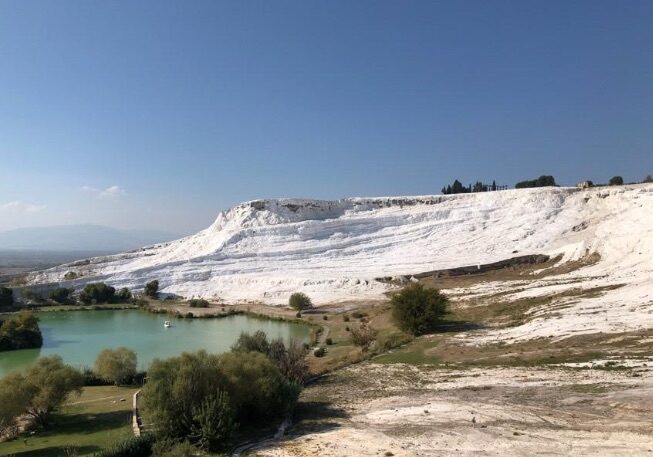
Many years ago I had the opportunity to visit the Dead Sea. Our Jordanian host explained in detail how living things had flowed into that body of water for centuries but nothing ever flowed out. I will never forget one statement that he made: “Life becomes death when it is kept to itself.” Churches die, Christians die, not because nothing flows into them, but because nothing flows out. We have received much. It is time to relay it to others. God never intended us to be Dead Sea Christians in Dead Sea churches.
Be more than a consumer. Be a contributer.
Discover more from Enjoying the Journey
Subscribe to get the latest posts sent to your email.
Post Author
More from similar topics
Christian Life | Christianity | Church | Dead Sea | consumerism | convenience | sacrifice | selfishness
always appreciate your column, you are very right . as a Christian your faith is pretty much under attack every where we go in the natural cause of a day and going to Church should be a time to strength your faith.
Thank you for the encouragement!
Brother Scott, this is an excellent article and a much needed message for our day.
Thank you, sir.