
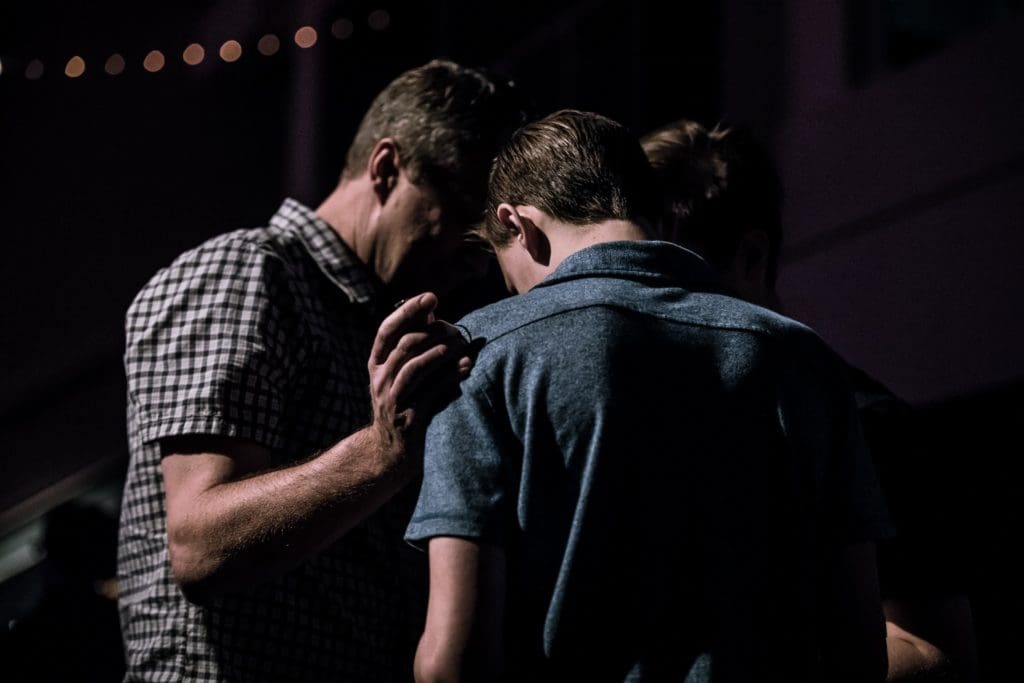
We are all students when it comes to prayer. Andrew Murray wrote a classic book called With Christ In The School of Prayer. I must confess to you that I feel as if I have not yet graduated from kindergarten when it comes to my prayer life! Indeed, until faith becomes sight we are all growing in our understanding and application of what it truly means to walk with God and talk to Him each day.
There are many questions when it comes to developing a more effective prayer life. But perhaps one of the most basic questions is the one we rarely ask: “How does a person learn to pray?”
Like all spiritual disciplines we may learn through one of three ways – through the Word of God, through our own practice in prayer, and through the example of others. In each case it is always the great Teacher, Holy Spirit, making God’s truth real to us. Jesus said, “Howbeit when he, the Spirit of truth, is come, he will guide you into all truth” (John 16:13).
Permit me to offer three simple, practical suggestions that each of us can apply:
- Study the prayers of Jesus and the inspired prayers given to us in Scripture. The Bible is the great prayer manual. As we get into God’s Word we find both inspiration and instruction for our prayers. A dear friend recently sent me a powerful book on Praying with Paul. I have been so helped as the author, D.A. Carson, shows how the recorded prayers of the Apostle Paul serve as a guide for our prayers. If we want to pray in God’s will then we must learn to pray in His Word.
- Pray. It is only as we pray that we truly learn how to pray. Spectators and academics cannot enter into an experiential knowledge and communion with God. We must be participants! Our Lord taught that only those who “will do” His will “shall know” the deep, spiritual things of God (John 7:17). Obedience is always the key to growth.
- Pray with someone who knows how to pray. As the first students listened to Jesus pray they asked, “Lord, teach us to pray” (Luke 11:1). The prayer closet is the great prayer classroom. Lectures and books will never accomplish as much as praying with someone who is growing in their own fellowship with God.
In these simple ways we all can learn from Scripture, from experience, and from the example of others how to be more effective in our prayers. We do not merely need to know more – we need to grow more. How easy it is to become a believer who has all of the Bible answers with little of the Bible application in our own lives. Begin by asking the Holy Spirit today to guide you into a personal understanding and practical application of His truth.
Discover more from Enjoying the Journey
Subscribe to get the latest posts sent to your email.


George Mueller’s autobiography has taught me how to take every thing big and small to God. And to wait patiently. This was his pattern every day. We’ve all heard the story of him praying bread in to the orphanage, but that was something he did every day.
It was Mueller who said that one day as he read “the steps of a good man are ordered by the Lord” the Holy Spirit reminded him that the “stops” are ordered by Him too!
Thank you for the article by the way. I love Andrew Murray’s book on prayerlessness as well.
Thank you.