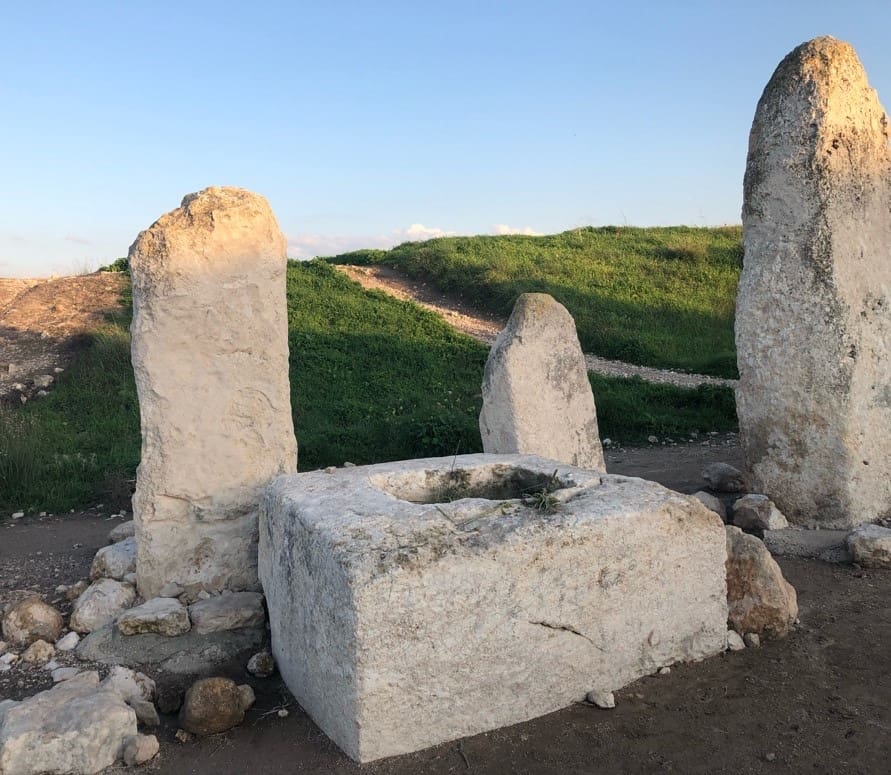
Pillars at Gezer
“Ye shall utterly destroy all the places, wherein the nations which ye shall possess served their gods, upon the high mountains, and upon the hills, and under every green tree: And ye shall overthrow their altars, and break their pillars, and burn their groves with fire; and ye shall hew down the graven images of their gods, and destroy the names of them out of that place” (Deuteronomy 12:2-3).
When Joshua divided the land, he assigned Gezer to the Levitical family of the Kohathites. (Joshua 21:21) They were, among other things, the singers during worship, and who carried the Tabernacle during Israel’s journeys in the desert. Despite this pedigree, they failed to fully expel the Canaanites from the city. The Bible says that the Canaanites dwelled in Gezer with them, with God’s servants.
At some point, the Canaanites did what the Israelites could not do and took full control of Gezer. Later, the Pharaoh of Egypt sacked the city, drove out the inhabitants, and gave it to his daughter as a wedding present when she married King Solomon (I Kings 9:16). King Solomon built the city up, including some massive gates and fortifications that can still be seen. In addition, he built Pharaoh’s daughter a house in Gezer, and that is where she lived.
“And Solomon brought up the daughter of Pharaoh out of the city of David unto the house that he had built for her: for he said, My wife shall not dwell in the house of David king of Israel, because the places are holy, whereunto the ark of the Lord hath come” (2 Chronicles 8:11).
After Solomon dedicated the temple in I Kings 9, he was visited by the Queen of Sheba in chapter 10, which was another victory for him and his kingdom. But then his foreign wives began to turn his heart away from God in chapter 11. The great king who was given so much by God, who saw the presence of God fill the Temple, began to build altars to pagan gods in Jerusalem, make offerings, and to burn incense.
“And likewise did he for all his strange wives, which burnt incense and sacrificed unto their gods” (I Kings 11:8).
When you stand by the kingly, pagan pillars in Gezer it is hard to believe that they were sanctioned by the same man who built the beautiful Temple to the true God in Jerusalem. How far he fell in his lifetime! Before him, the Levites could not expel the Canaanites from the land. In contrast to that, Solomon invited them into his life and joined them in worshipping idols.
Are you like Solomon? Are you building pillars, instead of tearing them down as God commands? Are you allowing other people in your life to turn you away from God? Christian, I urge you to follow God’s wishes and tear down the paganism in your life. Have you lost your fear of God, as Solomon did? Be warned that his idolatry cost him dearly in the end. The Bible says that the Lord stirred up many adversaries against Solomon during his lifetime because he forgot God.
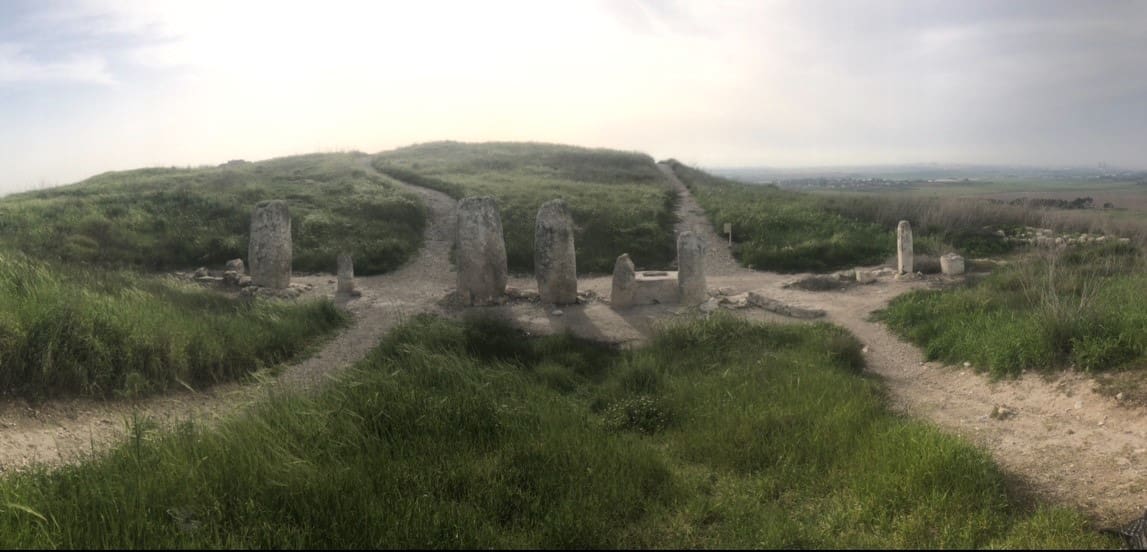
Idolatrous pillars in Gezer. The row contains ten standing stones, an altar, as well as a stone basin. Despite what Deuteronomy commands, the pillars are not broken. Photo by John Buckner
Discover more from Enjoying the Journey
Subscribe to get the latest posts sent to your email.