
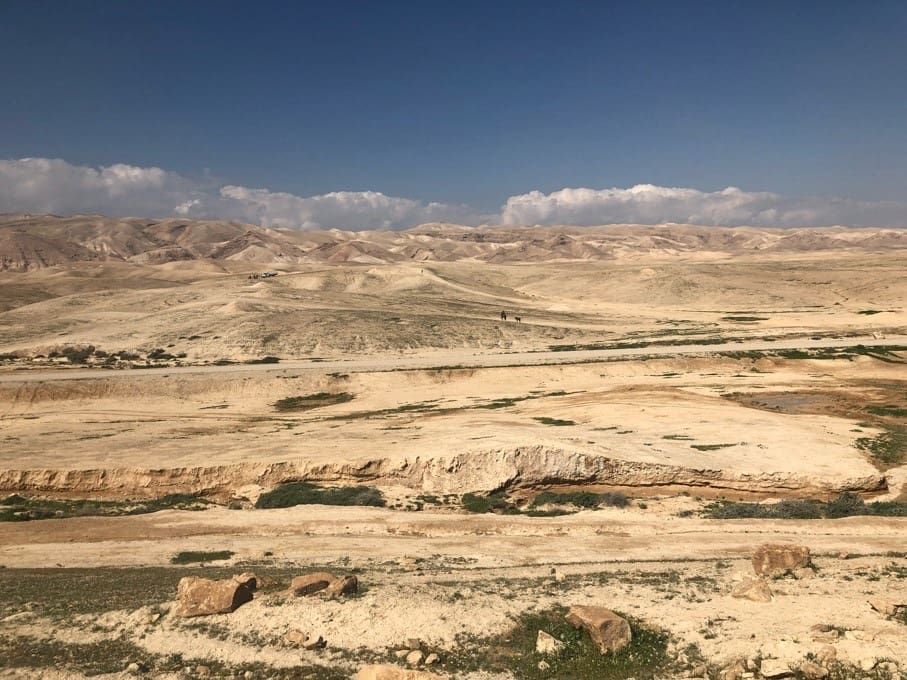
The Valley of Achor
“And Joshua, and all Israel with him, took Achan the son of Zerah, and the silver, and the garment, and the wedge of gold, and his sons, and his daughters, and his oxen, and his asses, and his sheep, and his tent, and all that he had: and they brought them unto the valley of Achor. And Joshua said, Why hast thou troubled us? the Lord shall trouble thee this day. And all Israel stoned him with stones, and burned them with fire, after they had stoned them with stones. And they raised over him a great heap of stones unto this day. So the Lord turned from the fierceness of his anger. Wherefore the name of that place was called, The valley of Achor, unto this day.” Joshua 7:24-26
Due to Achan’s disobedience to God, and the subsequent defeats this caused, the valley where he was stoned was called the Valley of Achor, or the Valley of Trouble. Today the valley is called Wadi Al Buqayah and houses a live-fire range of the Israeli Army’s tank corps. For that reason, it is only open to hikers a few days per month. However, it is worth exploring. Before you start the hike, your guide will go over all the reasons why you should not touch unexploded ordnance, and tell a few horror stories about people who did touch it.
In a way, it is a vivid reminder of the story of Achan and his taking of the things that God prohibited. Before the conquest of Jericho, God warned the people to reserve all of the gold and silver for Him. Despite this, Achan took some silver, gold, and a Babylonian garment. His sin brought a curse upon the people of Israel just as God warned.
The sin of disobedience, and the profanation of what is holy, was common throughout the history of the people of Israel. Despite the personal care that God Almighty showed them, they were tempted to disobey Him, and ignore His commands. Time and again, as in the story of Achan, the people of Israel suffered the judgments of God due to their faithlessness in Israel’s Holy One. Yet, God forgave His people again and again.
God thought of the errant, rebellious people of Israel as His bride. In Hosea 2, the prophet wrote “Therefore, behold, I will allure her, and bring her into the wilderness, and speak comfortably unto her. And I will give her her vineyards from thence, and the valley of Achor for a door of hope: and she shall sing there, as in the days of her youth, and as in the day when she came up out of the land of Egypt.”
In other words, God will take Israel back into the wilderness in an overt recreation of the exodus. God will do this to remind her of His redemption of her as a nation from the land of Egypt. In that time of love, Israel will sing with hope in the Valley of Achor. This troubled valley which was a symbol of defeat, disgrace, and ruin, will become a sign of hope.
Achan touched and took what God had forbidden. It is not just a sin that he committed. It is a sin that stretches all the way from the Garden of Eden to our lives. Have you, like Israel, forgotten the God of your youth? Have you taken the accursed thing and hidden it in your life, thinking that nobody will know? If so, the story of Achan warns you about the consequences. Repent before God’s judgment arrives, because it will come! Nevertheless, your story can become a story of hope. The Valley of Achor became a place of singing and reconnection with God. Just as in Hosea, your place of rebellion and punishment can become a place of revival.
Discover more from Enjoying the Journey
Subscribe to get the latest posts sent to your email.


Good writing and loved it!
Thank you for sharing!