Floods in the Desert John Buckner

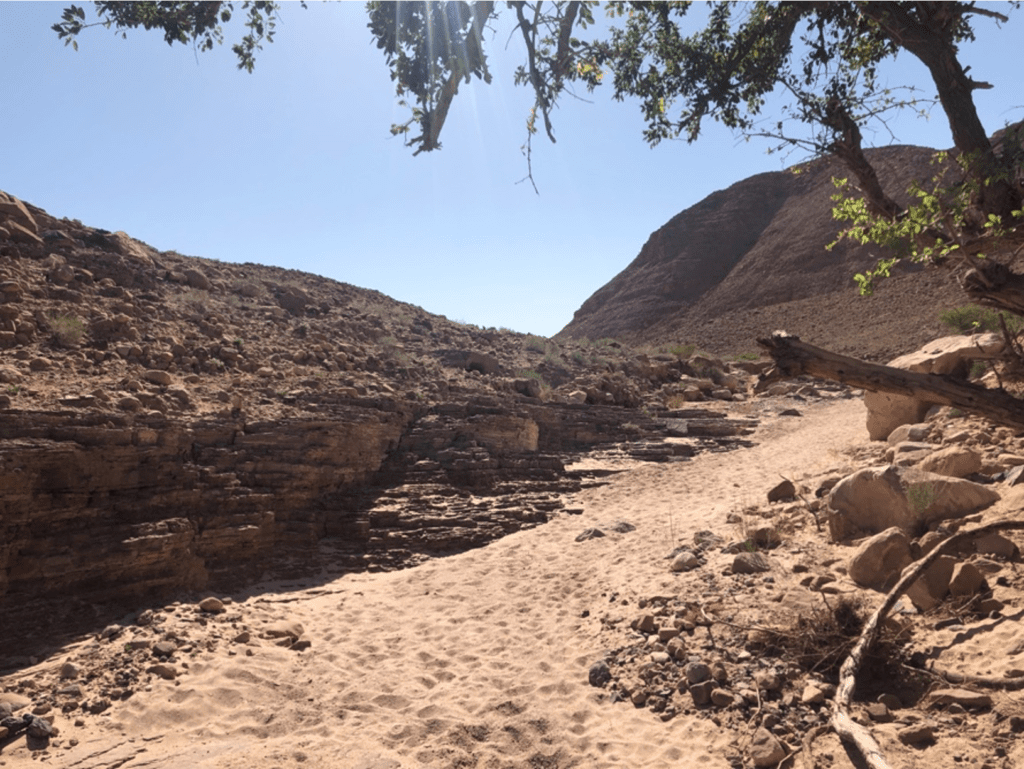
The soft, inviting sand in the bottom of most wadis appears to be an ideal place to pitch a tent for the night. However, the wise camper will instead spend the night on the high ground, despite the rocks and thorn bushes. Wadis, such as this one in Jordan, can be deceptive. 
Photo by John Buckner
And the rain descended, and the floods came, and the winds blew, and beat upon that house; and it fell not: for it was founded upon a rock. And every one that heareth these sayings of mine, and doeth them not, shall be likened unto a foolish man, which built his house upon the sand: And the rain descended, and the floods came, and the winds blew, and beat upon that house; and it fell: and great was the fall of it.” Matthew 7:25-27

In the deserts along the Great Rift Valley in Israel and neighboring countries, children learn early in life to be aware of rainfall in the highlands. When the rains start up in the mountains, floods can sweep down the sand-filled canyons, known locally as wadis. A wadi can go for years without experiencing a flood, but when it does come, it is sudden and violent. Car-sized boulders are flung about, and the water can be yards deep in mere moments. Some of the Arab tribes in the highlands have large drums that they bang when the rains begin. The noise carries far down the canyons and warns shepherds, hikers, and others to get to higher ground.

Jesus took care to use a local example to illustrate life following Him. His words challenge us to choose between the easy, soft, but ultimately destructive life of ignoring His teachings and trying our luck on the sand. Or we can choose to build in safety upon the rock.

His ancient audience would have immediately grasped that Jesus was not teaching about beach houses, but instead about building on the sand in the bottom of a desert wadi. Sooner or later, the rains will fall, and a flood will come crashing down the wadi to destroy everything the foolish man built. I am sure that they thought, “Nobody could be that foolish. Everyone knows to be careful down in the canyons.” However, Jesus used this local illustration to confront them with their own refusal to be wise and heed His words.

How about you reader? Where have you chosen to build your house? Are you ignoring Christ’s words down on the soft sands of the wadi floor? If so, I must warn you that destruction is coming. The only safe place to build your house is on the Word of God made flesh, our rock Jesus.

Discover more from Enjoying the Journey

Subscribe to get the latest posts sent to your email.
Post Author

More from similar topics

Subscribe to Blog via Email

Recent Posts

A journey through 1 John reveals our place in the family of God, how we can have assurance, and that our joy is rooted in Christ.

Journey through 1 John

“Jesus saw Nathanael coming to him, and saith of him, Behold an Israelite indeed, in whom is no guile! Nathanael saith unto him, Whence knowest thou me? Jesus answered and said unto him, Before that Philip called thee, when thou wast under the fig tree, I saw thee.” (John 1:47-48)

Why the Story of Nathanael Sitting Under the Fig Tree Matters

It also discusses the Four Sermons in Haggai It is in that context that God raises up the prophet Haggai with four sermons in four months. The Word of the Lord comes to Haggai, and he preaches four sermons. Each one of them is dated for us. Each sermon targets a different problem. You can read them in Haggai chapters one and two. In his first sermon (Haggai 1:1-15), Haggai preached on the danger of waiting when we should be working. They were waiting for a sign to build. He said, You don't need a sign, you need to obey God. Haggai's second sermon (Haggai 2:1-9) explained the danger of lamenting the past and missing the present. They were sorrowing over the destruction of the past temple. God said, Build a new one. It was G. Campbell Morgan who said, “It is impossible to unlock the present with the rusty key of the past." Many people are bogged down in their past and miss the present. Keep in mind what is at hand and what is ahead. The third sermon he preached (Haggai 2:10-19) described the danger of seeing only the material and neglecting the supernatural. They could see the work that needed to be done, but they missed the fact that God had resources that would help them get it done. The Lord was behind all of this. The fourth sermon (Haggai 2:20-23) warned against the danger of recognizing who is against us and forgetting who is for us. They were concentrating on the opposition and forgetting that “greater is he that is in you, than he that is in the world” (1 John 4:4). A journey through Haggai shows us the importance of performing the work that God has told us to do, and His glory in our obedience. Image leads to an overview of Haggai

Journey through Haggai

How Social Media Shapes Our Heart

How Social Media Shapes Our Hearts

Leave a Reply