“And the rain descended, and the floods came, and the winds blew, and beat upon that house; and it fell not: for it was founded upon a rock. And every one that heareth these sayings of mine, and doeth them not, shall be likened unto a foolish man, which built his house upon the sand: And the rain descended, and the floods came, and the winds blew, and beat upon that house; and it fell: and great was the fall of it.” Matthew 7:25-27
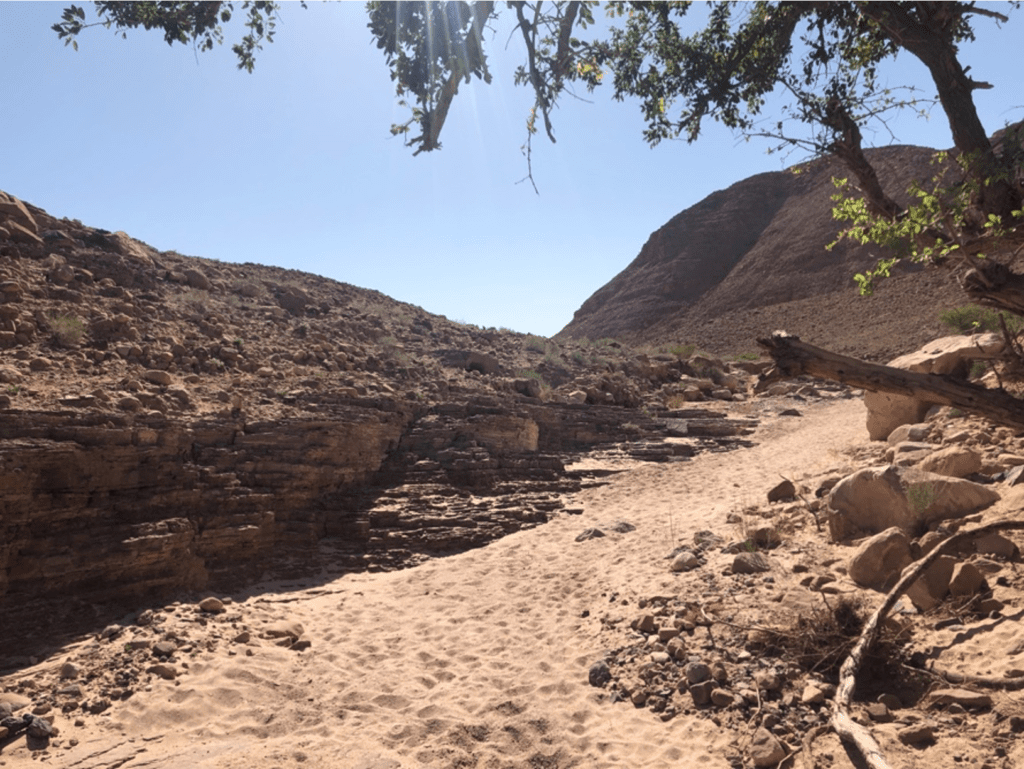
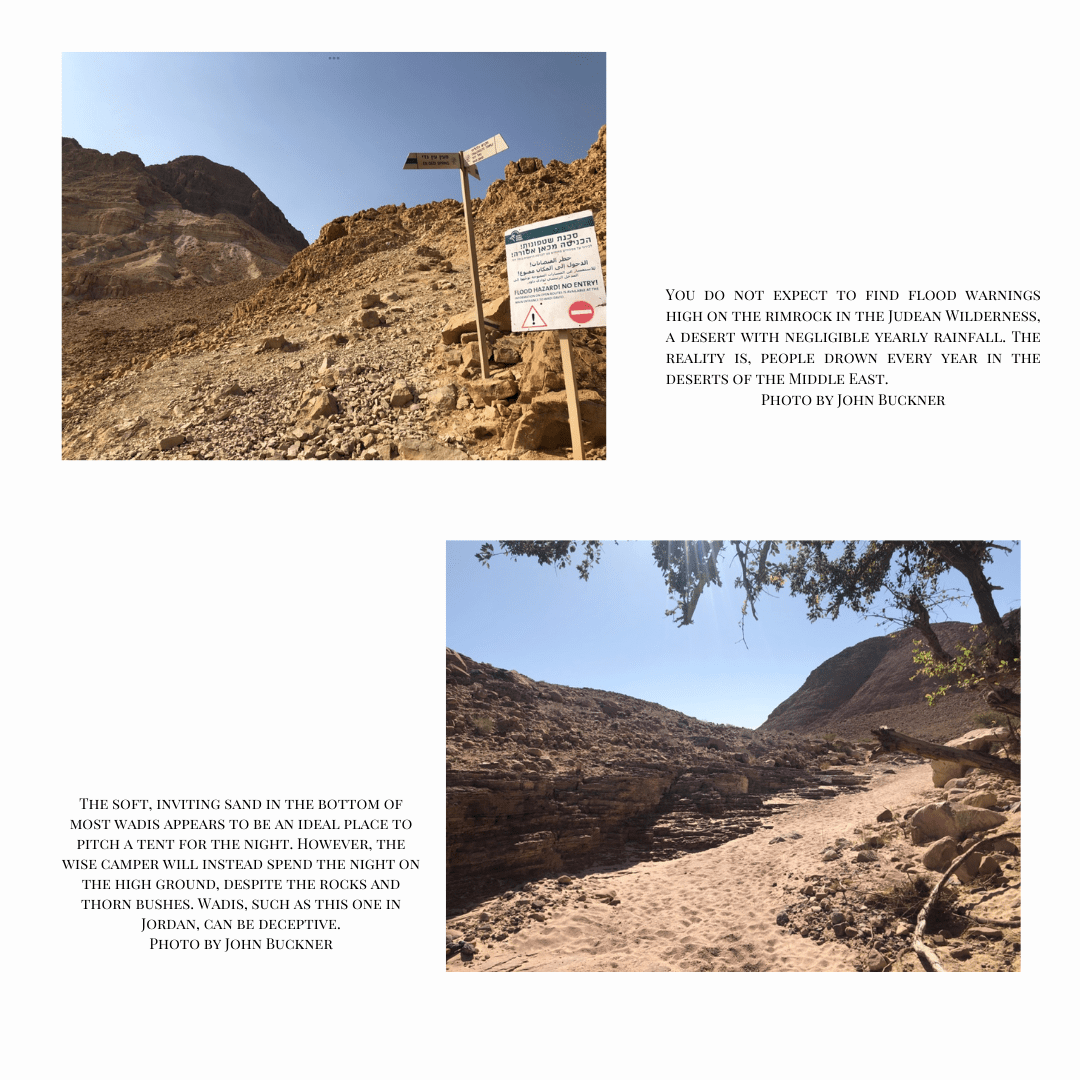
In the deserts along the Great Rift Valley in Israel and neighboring countries, children learn early in life to be aware of rainfall in the highlands. When the rains start up in the mountains, floods can sweep down the sand-filled canyons, known locally as wadis. A wadi can go for years without experiencing a flood, but when it does come, it is sudden and violent. Car-sized boulders are flung about, and the water can be yards deep in mere moments. Some of the Arab tribes in the highlands have large drums that they bang when the rains begin. The noise carries far down the canyons and warns shepherds, hikers, and others to get to higher ground.
Jesus took care to use a local example to illustrate life following Him. His words challenge us to choose between the easy, soft, but ultimately destructive life of ignoring His teachings and trying our luck on the sand. Or we can choose to build in safety upon the rock.
His ancient audience would have immediately grasped that Jesus was not teaching about beach houses, but instead about building on the sand in the bottom of a desert wadi. Sooner or later, the rains will fall, and a flood will come crashing down the wadi to destroy everything the foolish man built. I am sure that they thought, “Nobody could be that foolish. Everyone knows to be careful down in the canyons.” However, Jesus used this local illustration to confront them with their own refusal to be wise and heed His words.
How about you reader? Where have you chosen to build your house? Are you ignoring Christ’s words down on the soft sands of the wadi floor? If so, I must warn you that destruction is coming. The only safe place to build your house is on the Word of God made flesh, our rock Jesus.
Discover more from Enjoying the Journey
Subscribe to get the latest posts sent to your email.