“For this God is our God for ever and ever: he will be our guide even unto death.” – Psalm 48:14
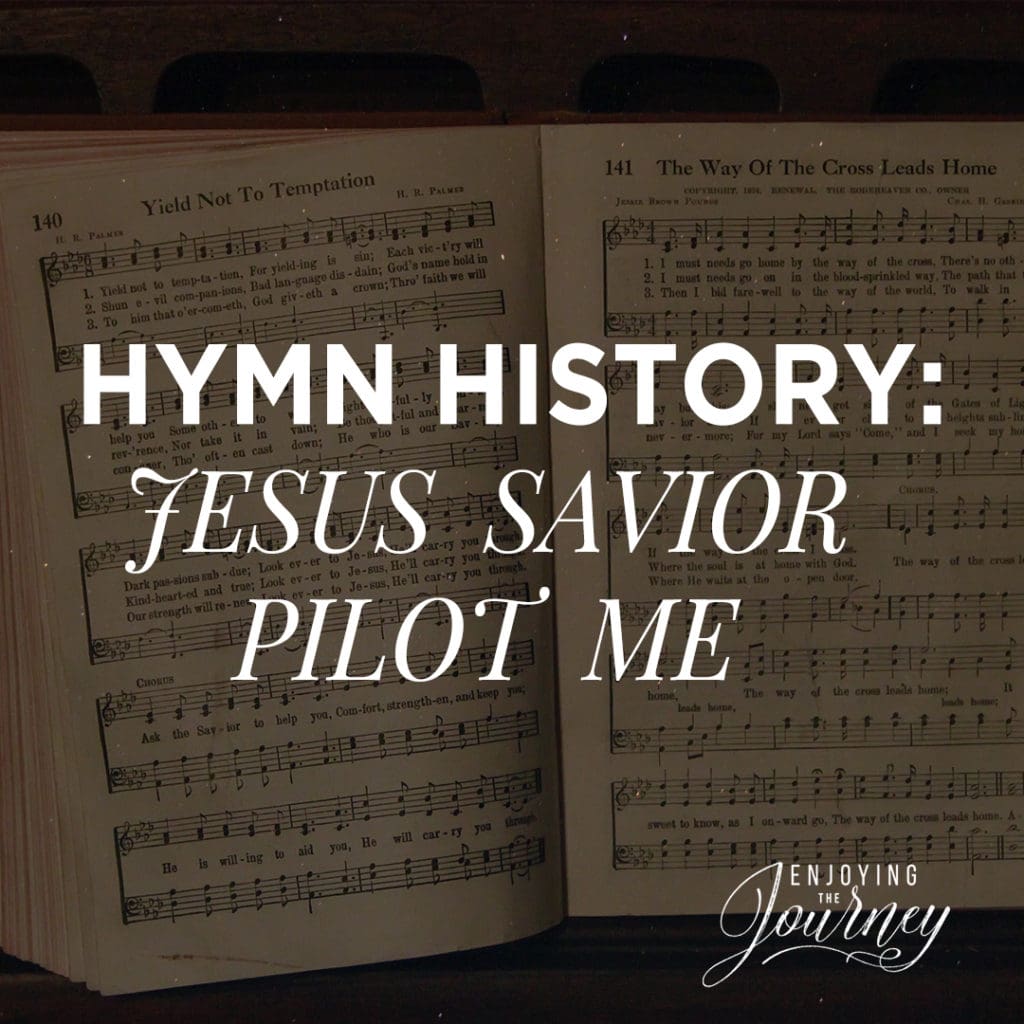
We are thrilled to share a series of brief accounts of how some of the great hymns of our faith were written. Each synopsis has been compiled through the research of Jerry Vargo and is shared by permission. It is our hope that these stories will be a help and encouragement to your Christian walk. This week we read the full and powerful story behind the stirring hymn, “Jesus Savior Pilot Me.”
__________________________________
Edward Hopper was born in New York City on February 17, 1818. His father was a merchant and his mother a descendant of the Huguenots, the persecuted French Protestants. In 1870, he began the most fruitful phase of his ministry when he became pastor of a church in New York harbor known as the “Church of Sea and Land.” For many years, he ministered very effectively to the many sailors who made their way to and from their ships.
It was while ministering at his sailor’s mission that Edward Hopper wrote this hymn. The text is especially for the spiritual needs of these sea-faring men. He wrote it anonymously, as he did all of his works, and for some time no one ever knew that the pastor of the sailors was also the author of the sailor’s favorite hymn. Jesus Saviour Pilot Me. The hymn has been included in nearly every evangelical hymnal published until the present time. Through the years it has been a hymn that is especially meaningful to young people sincerely concerned about knowing God’s will for their lives.
In 1880, the Seaman’s Friend Society had an anniversary celebration. Edward was asked to speak at the celebration and write a new hymn for the occasion. Instead of writing a new hymn, he quoted this hymn and then his secret was revealed. He was the one who wrote the sailors’ favorite hymn. John Gould had written the music.
Edward said of his hymn, “Happy is the man who can produce one song which the world will keep on singing after its author shall have passed away. “
At the age of seventy-two, Edward Hopper’s prayer expressed in the third stanza of his immortal hymn had its complete fulfillment…he entered into perfect rest. He was found sitting in his study chair, pencil in hand, writing a new poem on the subject of heaven.
1. Jesus, Savior, pilot me over life’s tempestuous sea;
Unknown waves before me roll, hiding rock and treach’rous shoal;
Chart and compass come from Thee—Jesus, Savior, pilot me.
2. As a mother stills her child, Thou canst hush the ocean wild;
Boisterous waves obey Thy will when Thou say’st to them, “Be still.”
Wondrous Sov’reign of the sea, Jesus, Savior, pilot me.
3. When at last I near the shore, and the fearful breakers roar
Twixt me and the peaceful rest —then, while leaning on Thy breast,
May I hear Thee say to me, “Fear not — I will pilot thee.”
Discover more from Enjoying the Journey
Subscribe to get the latest posts sent to your email.