“And they that know thy name will put their trust in thee: for thou, Lord, hast not forsaken them that seek thee. Sing praises to the Lord, which dwelleth in Zion: declare among the people his doings.” Psalm 8:10-11
“When peace like a river attendeth my way,
When sorrows like sea billows roll;
Whatever my lot, Thou hast taught me to say,
It is well, it is well with my soul.”
These words, penned by Horatio Spafford after the shipwreck that claimed the lives of his four daughters, continue to bring comfort to the hearts of millions of believers. Even over a century after the tragic events that caused him such pain, his words still ring true today.
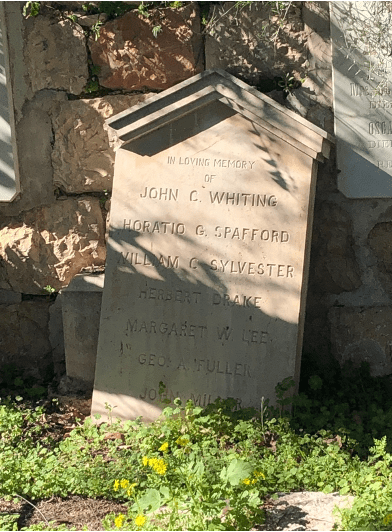
A lesser-known fact is that Horatio Spafford has a deep connection to the Holy Land and the city of Jerusalem in particular. He and his family moved to the city, where they founded a children’s home, among other ministries. He participated in the founding of the American Colony, and the hotel displays original copies of his song there. Outside of the old city’s Jaffa Gate is the Protestant Cemetery on Mount Zion. Inside, just to the right past the entrance, is Spafford’s grave.
The Spaffords lived in Jerusalem where they ran their children’s home. They used a house sitting against the Ottoman walls of Jerusalem. As is common in the Levant, their roof also served as a terrace. One day one of their visitors, a British Major-General named Charles Gordon, went up to the rooftop terrace to read his Bible. While looking out over the city, he became convinced that the skull-shaped hill directly in front of him had to be the site of Calvary.
The site had been proposed by others before him, but Gordon was the first to reason that the grave of Jesus must be nearby. So, he finished his Bible study and went over to the hill to investigate. As a result, He found the grave he was seeking that very day. Today, it is known as the Garden Tomb. It is a place of holiness and reverence for millions of visitors to the holy land.
The hymn Horatio Spafford wrote has long given comfort to believers in Christ. However, in this time of increasing turmoil and war, it is good to remember that all is still well in Zion. God is in control and everything is unfolding in His timing. Let’s join together and pray these words:
“And Lord, haste the day when our faith shall be sight,
The clouds be rolled back as a scroll;
The trump shall resound, and the Lord shall descend,
Even so, it is well with my soul.”
Until that day comes, we should busy ourselves with singing praises to the Lord who dwells in Zion. Do this by telling everyone about what He has done. He has regarded our helpless estate, and has shed His own blood for our soul!
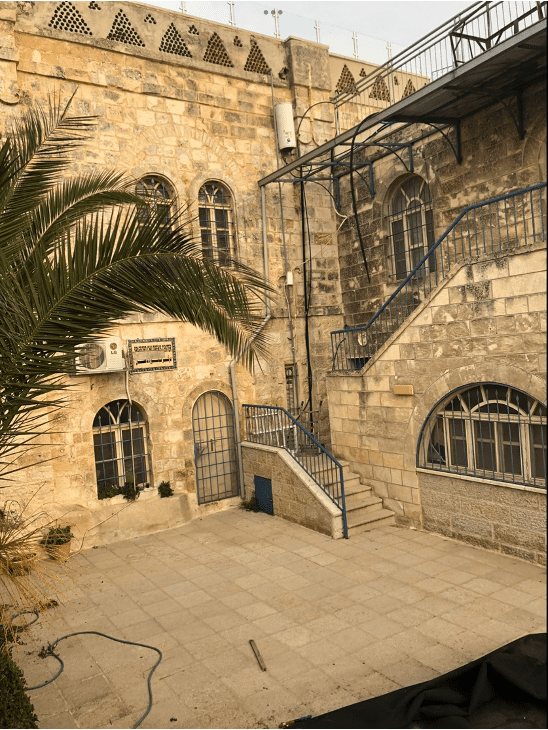
The historic Spafford Children’s center in Jerusalem. Charles Gordon was doing his devotions on this roof when he became convinced that Jesus’ tomb could be located by searching around the skull-shaped hill nearby, just outside the city.
“My sin-oh the bliss of this glorious thought!
My sin, not in part but the whole,
Is nailed to the cross, and I bear it no more,
Praise the Lord, praise the Lord, O my soul!”
Photo by John Buckner
*The main image is of the historic Spafford Children’s center in Jerusalem. Charles Gordon was doing his devotions on this roof when he became convinced that Jesus’ tomb could be located by searching around the skull-shaped hill nearby, just outside the city.
“My sin-oh the bliss of this glorious thought!
My sin, not in part but the whole,
Is nailed to the cross, and I bear it no more,
Praise the Lord, praise the Lord, O my soul!”
Photo by John Buckner
Discover more from Enjoying the Journey
Subscribe to get the latest posts sent to your email.