
The Castle of the Servant
“When Sanballat the Horonite, and Tobiah the servant, the Ammonite, heard of it, it grieved them exceedingly that there was come a man to seek the welfare of the children of Israel” (Nehemiah 2:10).
An enigmatic figure of Scripture is Tobiah the Ammonite. He came from a clan that may or may not have been Jewish. The Bible, ancient writings, and archeology all attest to the Tobiads. They lived in Ammon, east of the Jordan River. The sons of Tobiah are listed as among those who could not prove their genealogy, nor even that they were in fact Jews in the book of Nehemiah (7:62). This lack of evidence expelled them from the priesthood. Despite this, Tobiah received permission to store goods in the Temple, possibly to sell to worshippers who came up to the house of God. However, the people read the writings of God’s man Moses and found that Ammonites were not to be allowed into the congregation of God forever. On that basis, Nehemiah carried all of his enemy’s belongings out of the Temple, and cleansed it.
Writings found at the archeological site of Lachish in Judah mention a man named Tobiah who was both “the servant of the king” and “the arm of the king.” He may have been a local representative of the distant king Artaxerxes. In the book of Nehemiah, Tobiah allied himself with powerful non-Jewish landowners and the high priest in Jerusalem. So when Nehemiah called him the servant, it may be that Tobiah’s position was deceptively titled and he was in fact a man of high status.
East of the Jordan River, in the lands of biblical Ammon, you can still visit the magnificent ruins of Qasr Al-Abd, or the Castle of the Servant. The name shows that it belonged to the king’s local representative. It and the nearby burial grounds have been linked to the family of Tobiah and his wealthy family in Ammon by the writings of Josephus, and two burial inscriptions in tombs on the castle grounds.
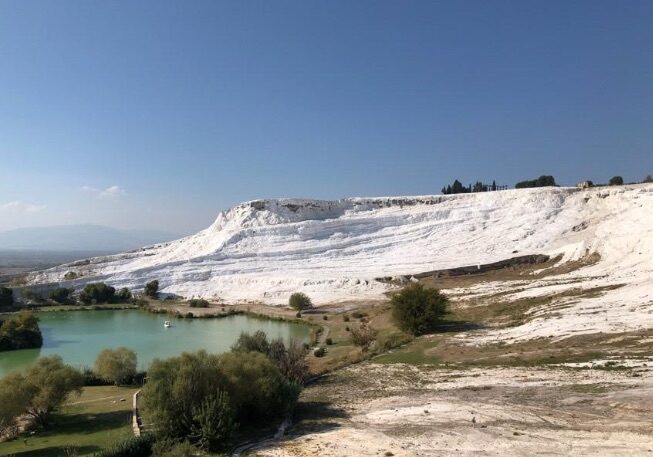
One of the inscriptions dates to the 4th century BC, or possibly earlier. They built the palace itself after the events of Nehemiah. It also shows that the Tobiah had deep roots in Ammon, had wealth, and had an identity as servants. They constructed the building with some of the largest blocks of stone found in the Middle East. This man-made reflecting pool sat so that fountains watered the luxurious gardens surrounding it. It was hardly the hovel of a lowly peasant. This servant was high-ranking!
Nehemiah came to Jerusalem to rebuild the city where God chose to put His name forever. This grieved Tobiah the servant. Whenever you begin a work for God you should expect resistance from the enemy’s servants. Just as it angered Tobiah to see Nehemiah seeking the good of Jerusalem and the people of Israel, it will anger Satan when you honor God. If that is the case in your life, Nehemiah shows us exactly how to handle the mocking servants of darkness. Remind them that you are a servant of Almighty God!
“But when Sanballat the Horonite, and Tobiah the servant, the Ammonite, and Geshem the Arabian, heard it, they laughed us to scorn, and despised us, and said, What is this thing that ye do? will ye rebel against the king? Then answered I them, and said unto them, The God of heaven, he will prosper us; therefore we his servants will arise and build: but ye have no portion, nor right, nor memorial, in Jerusalem” (Nehemiah 2:19-20).
Nehemiah could have told them that he was the king’s cupbearer. As such he was a trusted servant of Artaxerxes as well. However, he knew that this fight was spiritual and instead invoked the God of Heaven. When you begin to build something for God, and the enemy sends his high-ranking minions to resist you, to intimidate you, and to threaten to tear down your work. Do what Nehemiah did. Arise and build, confident that your King is the eternal God of Heaven.
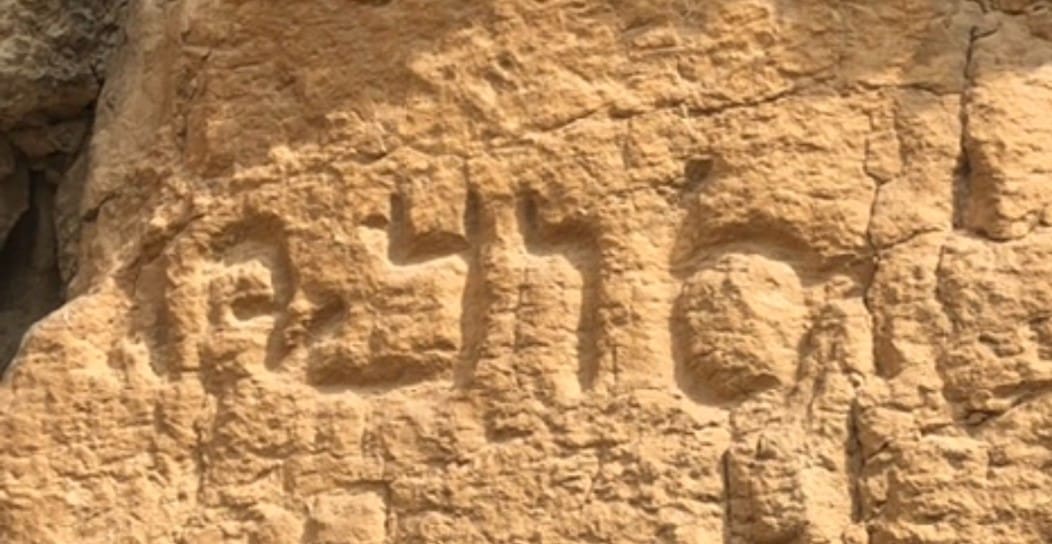
Ancient Hebrew inscription of the name Tobiah. Aramaic influenced this script. It lies at the entrance to a series of tombs near the castle. The dating is in dispute, but it probably dates to very close to the time of Nehemiah. Photo by John Buckner
Discover more from Enjoying the Journey
Subscribe to get the latest posts sent to your email.