
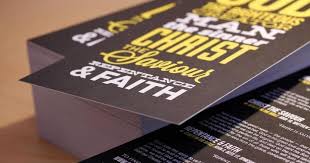
Recently, I wrote a brief article on “Why You Should Use Gospel Tracts.” If you have not read it already, I hope you will do so now. I am convinced that this is one of the great tools at our disposal for the advancement of the gospel! It is something everyone can do.
Like every tool, gospel tracts can be used effectively or ineffectively. How can we make the most of our opportunity?
- Choose gospel tracts that are simple but complete. Be sure that the gospel message is plain and Scripture is prominent. At the same time, a gospel tract is not a book and should be very readable. People typically will only spend a few moments with it. It doesn’t matter how nice the piece looks if it lacks clarity of message.
- Use literature that is well done. A tract that is designed well and beautifully printed is more likely to be received and kept. There are a number of places that do a first-class job. I use Faithworks Media for our ministry tracts. There are many others as well. Share any suggestions you may have in the comments.
- Keep tracts accessible to you. Carry some with you each day. Keep a supply in your car or home. In this way, you are always ready with something to give people at a moment’s notice about Christ.
- Pray over the tracts you distribute. Each witness should be accompanied by prayer. Ask the Lord to open the eyes and hearts of those who will read the literature. Claim the promise that God’s Word will not return void (Isaiah 55:11).
- Offer the gospel tract in a kind, humble way. I love to begin by saying: “Can I give you something encouraging to read?” A smile and a kind tone go a long way. If you are offering it to someone who has served you in some way, include a generous tip. Remember that our attitude toward them may determine their attitude toward what they are reading. Gypsy Smith said, “God wrote five gospel records – Matthew, Mark, Luke, John, and the believer. And most people will never read the first four!”
- Give tracts at appropriate times. Look for every opportunity you can, but remember that every circumstance is different. Often when I am in line I may say to someone who is helping me, “I wanted to give you something good to read when you get a break later.” Always be polite and courteous.
- Keep it personal, not professional. We should not distribute gospel literature like the local business does fliers about some “special.” We are not selling. It is not about the numbers. Make each witness personal. You may say, “This is something that made a real difference in my life.” Share a personal word of testimony with the tract. Remember that outside of the gospel, the most powerful tool you have is your own testimony.
- Don’t be discouraged by rejection. Sometimes people will not accept literature. A Jewish man recently gave a tract back to me and said he would not read it. I continued a cordial conversation with him and before I left had made a new friend. Always keep the door open for the gospel in the future.
- Follow up on the tract if possible. Often, you will not see the person again to whom you gave a tract. Yet one of the most effective ways to use gospel literature is to say, “Let me give you something to read, and once you are finished with it I would like to know what you think about it.” Tracts can open the door for further conversations about Christ.
- Never let a piece of paper substitute for personally speaking to others about their soul. We should not hand out tracts “instead of” learning to engage others with the gospel, but “in order to” engage others with the gospel. Learn how to walk someone through a gospel tract and explain the way of salvation.
The Ethiopian eunuch was reading the Scriptures but needed some man to guide him to God (Acts 8:31). Everyone does. Tracts can help point the way, and each of us can do our part.
*Visit our Witness page for tools, articles, video teaching, and broadcasts on learning to share your faith boldly and effectively:
Learn How to Witness for Christ
About Scott Pauley
Discover more from Enjoying the Journey
Subscribe to get the latest posts sent to your email.






This is good stuff. I don’t usually read a lot of articles like this but I teach the Soul-winning class at our church and some of this is in the curriculum that I wrote and it’s great to see the different ways to share the Gospel and that it’s able to be given out in so many ways !
Happy it could be of some help. God bless you as you teach folks there!
God bless you too. I am blessed by this wonderful teaching. Thanks a lot !!
Very thankful.
This article was very helpful. Looking forward to sharing this with my pastor.
Member of Antioch Baptist Church in LA