“For a certain man named Demetrius, a silversmith, which made silver shrines for Diana, brought no small gain unto the craftsmen; Whom he called together with the workmen of like occupation, and said, Sirs, ye know that by this craft we have our wealth. Moreover ye see and hear, that not alone at Ephesus, but almost throughout all Asia, this Paul hath persuaded and turned away much people, saying that they be no gods, which are made with hands: So that not only this our craft is in danger to be set at nought; but also that the temple of the great goddess Diana should be despised, and her magnificence should be destroyed, whom all Asia and the world worshippeth.” Acts 19:26-27
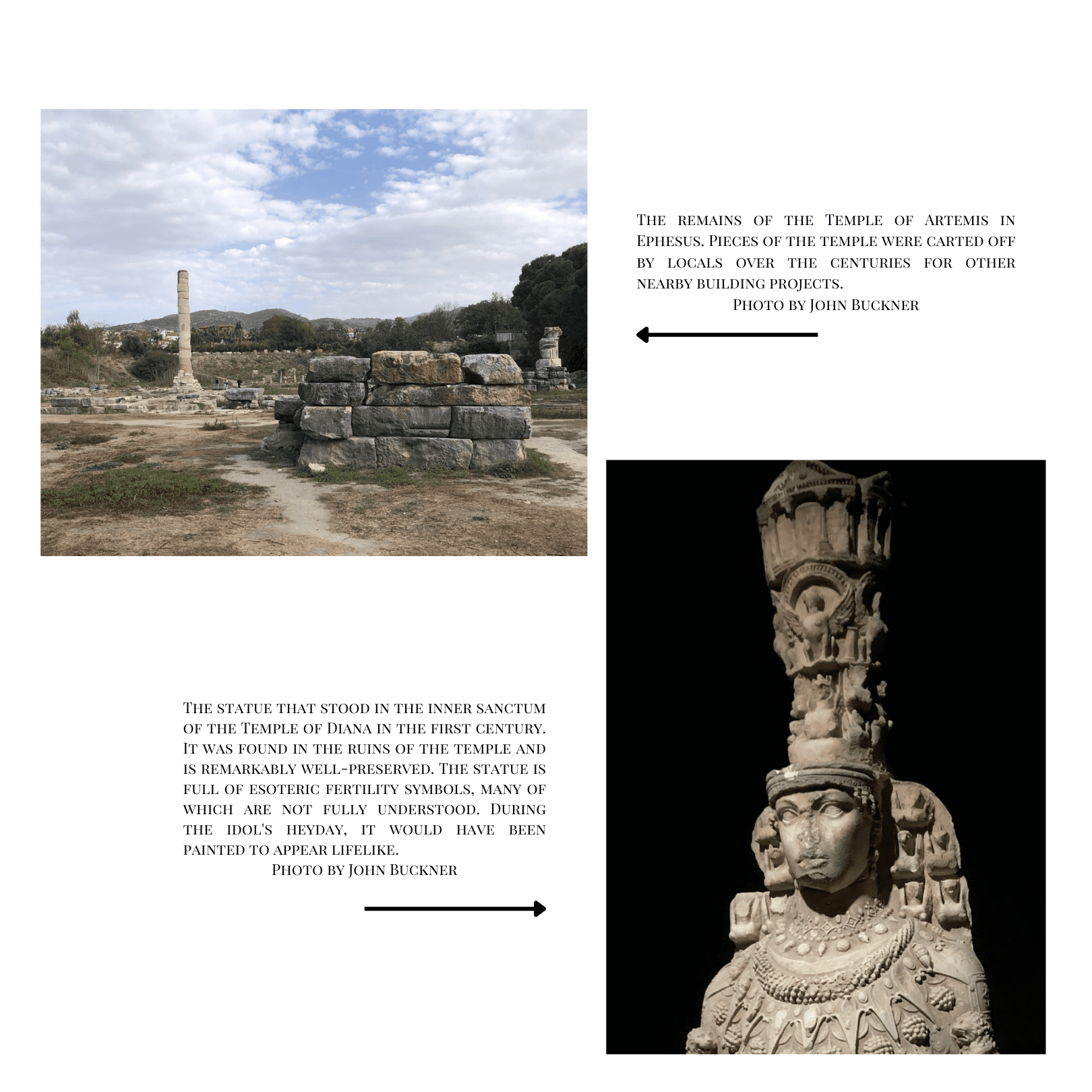
The worship of Diana, also known as Artemis, was merged in the east of the Roman Empire with a native primordial mother goddess, creating a syncretic fertility cult. Diana’s temple in Ephesus was one of the seven wonders of the ancient world, along with the pyramids of Giza, the lighthouse of Alexandria, and others. Diana’s worship, as the verses above attest, was the most important in the Roman province of Asia and the whole eastern Mediterranean.
As the silversmith Demetrius predicted, the worship of Diana fell out of favor in the centuries after the coming of Christianity. The temple fell into disuse and was eventually abandoned. Today, little of the temple remains to be seen. The people who previously focused on worshipping the works of their own hands turned to the worship of the living God. Paul praised the Ephesians for their faithfulness, while the Apostle John wrote of their patience in the Lord.
As a modern person, it is easy to sneer at the primitive beliefs of the people who lived before us. However, we should ask ourselves if we are really all that different. Certainly, few modern people worship and sacrifice to a pagan idol. Yet, all too often, we set up the works of our own hands as objects of reverence and worship. Just as the Ephesians combined the religious traditions of the East and West when they came up with the worship of Diana, so too we often combine the truth of God’s Word with pagan elements gleaned from the surrounding world.
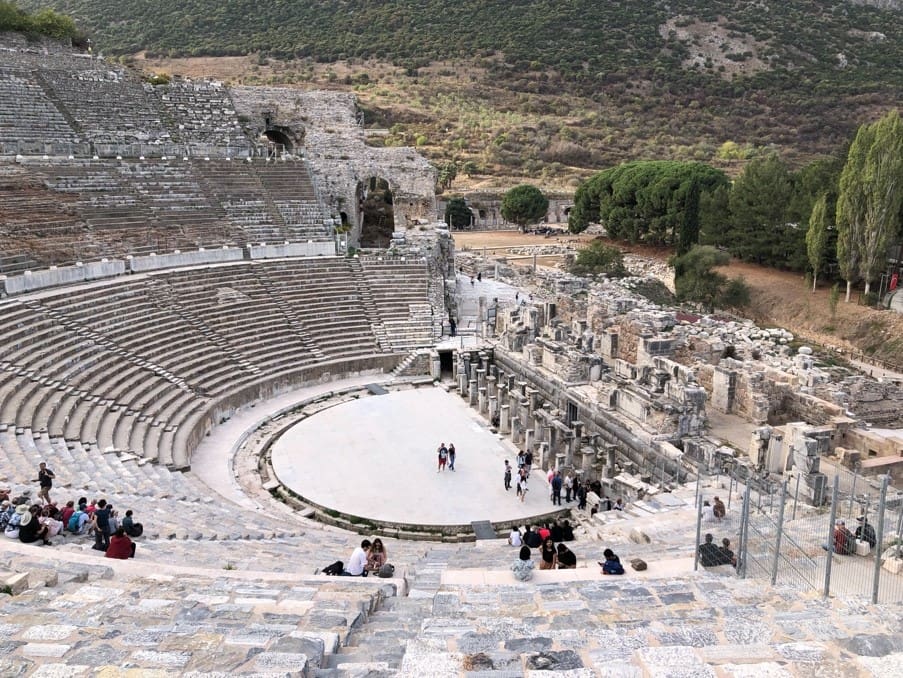
The Ephesians gathered as a mob in the theater and shouted for two hours, “Great is Diana of the Ephesians!” What is the idol that you have made with your own hands, which you defend with equal passion? I urge you to abandon it like the ancient Temple of Diana. In the prophetic words of the pagan Demetrius, you should despise it and destroy its magnificence.
Discover more from Enjoying the Journey
Subscribe to get the latest posts sent to your email.