“And the Lord appeared unto him in the plains of Mamre: and he sat in the tent door in the heat of the day; And he lift up his eyes and looked, and, lo, three men stood by him: and when he saw them, he ran to meet them from the tent door, and bowed himself toward the ground” (Genesis 18:1-2).
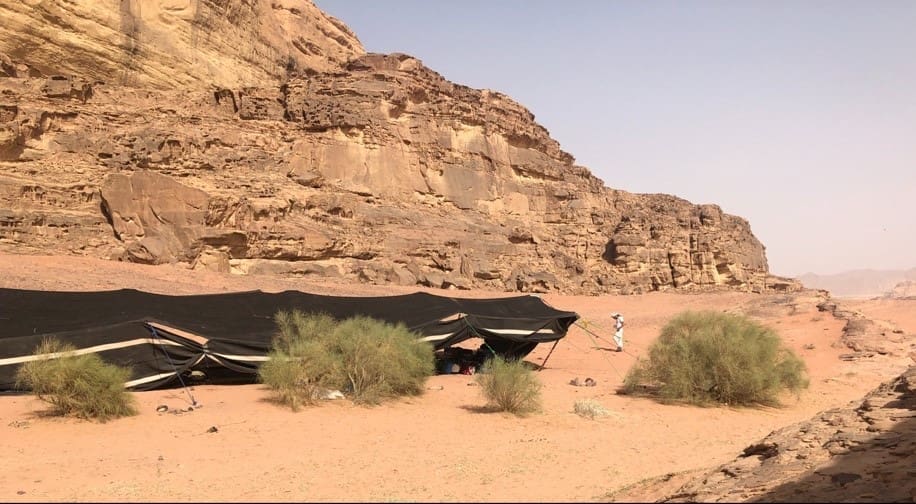
The stories of the patriarchs of the Bible are intertwined with their tents. We read of them moving to various places in the land and pitching their tents. Indeed, the Israelites appear to have lived in tents up until at least the time of the division of the kingdom upon Solomon’s death. (2 Chronicles 10:16) A good parallel for the student of the Bible is the Bedouin culture of the Middle East. They are scattered through most of the countries of the region, with large populations in Israel and the surrounding countries of Jordan, Egypt, Lebanon, and Syria. It is not a perfect parallel, but we can learn a lot about the patriarchs, and indeed biblical Israel from this ancient people. Most Bedouin are traditionally either nomadic or semi-nomadic, just like the patriarchs were. They will move about in their area seeking grazing for their flocks, as well as water. An important aspect of nomadic Bedouin life is their tent. Even if they have a modern job in the city, they will often maintain their tents out on their family’s traditional grazing grounds in the wilderness.
The tents are made of black goat hair, frequently with white stripes. “I am black, but comely, o ye daughters of Jerusalem, as the tents of Kedar, as the curtains of Solomon” (Song of Solomon 1:5). The tent over the tabernacle in the wilderness was made from goat hair as well (Exodus 36:14). The tents of the desert nomads are designed to function in the place of houses, and are much more substantial than most Western tents. However, they can be packed up in a few hours and loaded onto camels. Or, as was the case one time when I camped with the Bedouin in Jordan, piled into the bed of a pickup truck. I was then told that my seat was on top of the tent. The ride through the desert was precarious and exciting!
The weave of the tents is tight enough to keep out all but the hardest rain. However, the cloth does allow thousands of little sparkles of light through during the day. The Bedouin call that phenomenon “daylight stars,” since they shine in the black cloth of the tent. God promised Abraham that he would have a son, and that his seed would inherit the land in Genesis 15. God took him outside of his tent, and told him to look up and try to count the stars in the night sky. That was how numerous his descendants would be. Abraham believed God and it was counted to him for righteousness. Whenever Abraham sat in his tent during the day, he could see a reminder of God’s promise in the glints of light coming through the tent roof. At night when he went out, he could again look up and see God’s promise written in the heavens.
The patriarchs of the Bible dwelt in tents (Hebrews 11:9). However, they were looking for a city that was founded and built by God Himself. As believers in Jesus, we too are looking for that city. Like the patriarchs, we are sojourners here on earth, not permanent residents. In contrast to this, the Bible says that Lot “pitched his tent toward Sodom” in Genesis 13:12, but by Genesis 19:2, we see that he owned a house in that wicked city. He gave up the life of faith modeled by Abraham, and became a permanent resident of that wicked city. How about you Christian? Are you following God like Abraham? Or have you, like Lot before you, forsaken that life and built yourself a cozy house in the midst of Sodom?
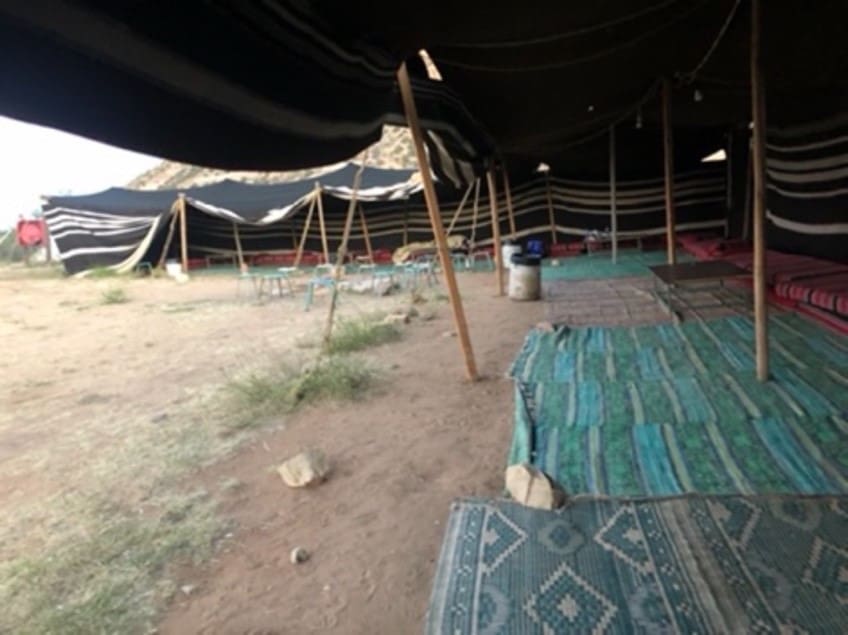
Bedouin tent in Wadi Dana, biblical Edom, in southern Jordan. The Bedouin set their tents up in either an L shape, or a U shape. The back is toward the prevailing winds of the area. This tent is set up in the traditional fashion with cushions for sitting or reclining. Abraham was most likely sitting in the door to get a bit of breeze, without leaving the shade of the tent when he saw the heavenly visitors approaching. Photo by John Buckner
Discover more from Enjoying the Journey
Subscribe to get the latest posts sent to your email.