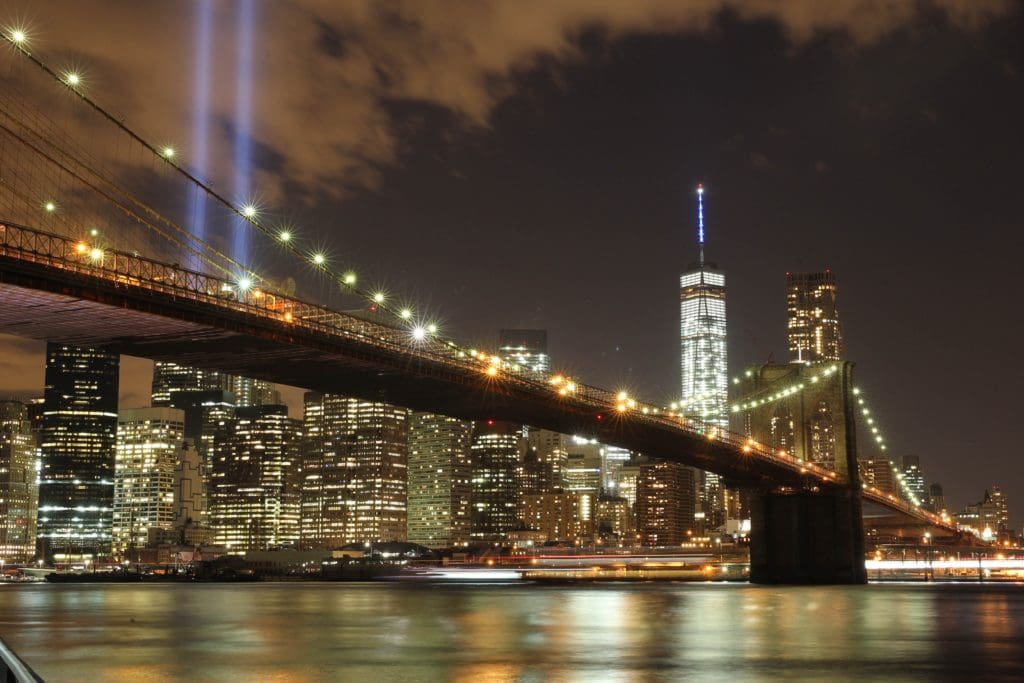
It was a beautiful, sunny morning. As I made my way from one building to another on our campus a co-worker came running out onto the sidewalk. I still remember his words: “A commercial airliner has just flown into the World Trade Center in New York City.” It was just before 9 am. Moments later I stood in a room watching live coverage as another plane hit the second tower. It was 9:03.
Yes, I remember.
I remember the sick feeling in my stomach as we sat glued to coverage throughout the afternoon. I remember the numbness as we tried to process the staggering loss of life. I remember the grief that darkened that bright day.
Just a few days later I arrived in New York City with a group of workers from our ministry. We got as close as we could to ground zero but soon realized that the spiritual need was not limited to that fateful spot; the entire region was reeling and people were hurting. Night and day we met with first responders at local police departments and fire halls. We prayed with searching souls and shared the hope found in the gospel.
I remember one of the most fruitful days of witnessing I have every personally had during that time. From the corner where we ministered on Flatbush Avenue in Brooklyn you could still see the towers of smoke rising from where the Trade Center Towers had stood. And I remember the Jewish woman sitting in the back of that Baptist church auditorium in Manhattan. She had stood beneath the towers and watched people jump to their deaths. “Sir, I can’t get it out of my mind. What am I to do?” Yes, I remember.
It was a strange time in the normally bustling city. People usually brushed by without making eye contact and rarely did they have time to take a piece of literature. But on those days I literally saw business men stand in line to take a gospel tract…and then watched them return for more to give to others in their offices.
I remember the politicians standing on the steps of the Capitol singing “God Bless America.” Churches were full of people looking for help and hope. Death had come near and eternity seemed more real than ever.
Do you remember?
Such memories should do more than stir our emotions. They should cause us to reexamine our lives and priorities now. Remembering should drive us back to the God who has been sorely neglected in our busy days. Remember that true and lasting hope is only found in Jesus Christ! We didn’t just need Him on 9/11 – we need Him today and every day! It is time to remember the truth of Scripture and the power of prayer. How quickly we forget.
“Wherefore I will not be negligent to put you always in remembrance of these things, though ye know them, and be established in the present truth” (2 Peter 1:12).
(Watch the live-stream God Bless America Rally tonight at 7 pm at GodBlessAmericaRally.com. We will honor veterans and military families and Scott Pauley will give a gospel message on “Hope That Lasts.”)
Discover more from Enjoying the Journey
Subscribe to get the latest posts sent to your email.