
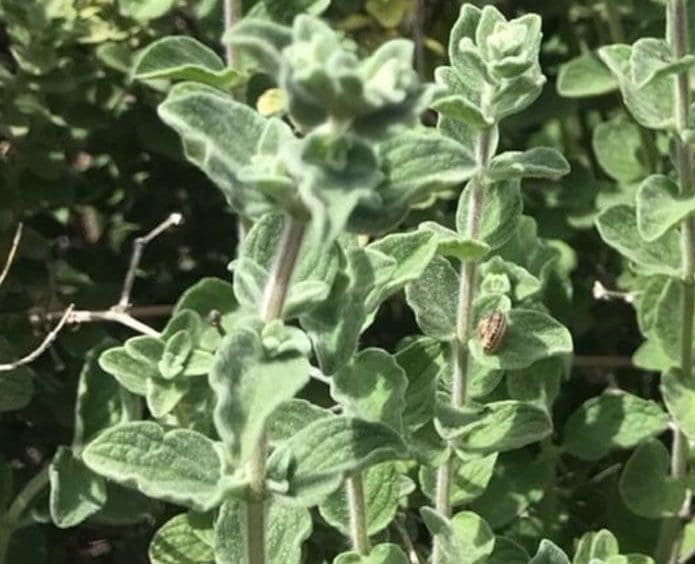
Hyssop
“Purge me with hyssop, and I shall be clean: wash me, and I shall be whiter than snow. Make me to hear joy and gladness; that the bones which thou hast broken may rejoice. Hide thy face from my sins, and blot out all mine iniquities. Create in me a clean heart, O God; and renew a right spirit within me.” Psalm 51:7-10
When Moses and the Israelites left Egypt, God told them to tie ezov, known as hyssop in bunches and use it as a brush to apply blood to the doorposts during the climactic events of the Exodus. Samaritans still use hyssop to sprinkle blood during their annual Passover sacrifices on Mount Gerizim. Their tradition relates that God commanded the Israelites to use ezov due to the hairy stems, which hold onto blood, and slow down coagulation.
The ancient writers Pliny and Dioscorides credited hyssop with cleansing properties. Many people added it to both drinks and perfume in antiquity. Today, hyssop is a popular food ingredient in the Middle East. Arabs crush hyssop, then mix it with sesame seeds, salt, pepper, and other spices. This is known as za’atar and is baked into bread. The bread often accompanies meals as a starter dish, because it is dipped in sauces or olive oil. In addition, ezov is delicious to pick fresh and eat with green apples!
In I Kings 4:32 the Bible tells us that King Solomon’s proverbs encompassed all trees from the mighty cedars of Lebanon, all the way down to the hyssop which sprouted from the wall. The ancient Jews believed that this verse taught that hyssop was the humblest of stemmed plants, and served as a contrast to the mighty cedar. Cedars are used as a metaphor for pride and arrogance throughout the poetic and prophetic books of the Old Testament. For instance, Isaiah prophesied: “For the day of the Lord of hosts shall be upon every one that is proud and lofty, and upon every one that is lifted up; and he shall be brought low: And upon all the cedars of Lebanon, that are high and lifted up, and upon all the oaks of Bashan” (Isaiah 2:12-13).
For that reason, when David sinned with Bathsheba, he begged God to purge him with hyssop, to cleanse him of his sinful pride. “For thou desirest not sacrifice; else would I give it: thou delightest not in burnt offering. The sacrifices of God are a broken spirit: a broken and a contrite heart, O God, thou wilt not despise.” Psalm 51:16-17 In his rebellion he allowed his heart to become sinful, to be lifted up like a cedar tree. When he committed adultery, killed his bodyguard Uriah, and stole his wife, David behaved just like a Canaanite king, instead of a man after God’s own heart. The prophet Nathan told him that his sin had “given great occasion to the enemies of the LORD to blaspheme.” (2 Samuel 12:14) Presumably, the enemies of God pointed out the hypocrisy of Israel’s king breaking several of the Ten Commandments.
Christian, a wise person will learn from the mistakes of others, especially great men like King David. Even though God pardoned his sin, David’s life and reign were never the same. He is forever known as the sweet Psalmist of Israel, but also as an adulterer and murderer. If you have allowed your heart to become lifted up with pride, and you are behaving arrogantly toward God’s laws, ask Him to cleanse you with hyssop, with humility. Do not wait until you commit some grievous sin that dishonors God’s holy name. Pray the contrite words of Psalm 51, and humble yourself. Do not wait for God to break you, as He did with David.
“The voice of the Lord is powerful; the voice of the Lord is full of majesty. The voice of the Lord breaketh the cedars; yea, the Lord breaketh the cedars of Lebanon.” Psalm 29:4-5
Discover more from Enjoying the Journey
Subscribe to get the latest posts sent to your email.