“To whom coming, as unto a living stone, disallowed indeed of men, but chosen of God, and precious, Ye also, as lively stones, are built up a spiritual house, an holy priesthood, to offer up spiritual sacrifices, acceptable to God by Jesus Christ. Wherefore also it is contained in the scripture, Behold, I lay in Sion a chief corner stone, elect, precious: and he that believeth on him shall not be confounded. Unto you therefore which believe he is precious: but unto them which be disobedient, the stone which the builders disallowed, the same is made the head of the corner, And a stone of stumbling, and a rock of offence, even to them which stumble at the word, being disobedient: whereunto also they were appointed” (I Peter 2:4-8).
Zedekiah’s Cave
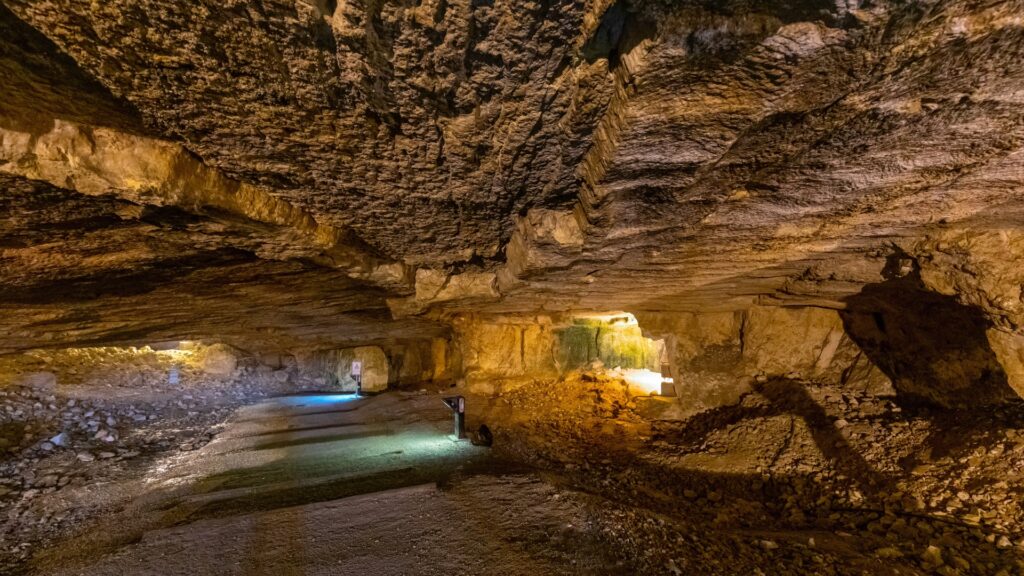
Between Damascus Gate and Herod’s Gate in Jerusalem’s old city lies a seldom-visited site of interest: the massive quarry that stretches for quite a distance underneath the Muslim Quarter. It is called Zedekiah’s Cave, in reference to the biblical king who reigned during the time of Jeremiah. The local legend is that he hid here when he was fleeing from the Babylonians. A much more likely story is reflected in the alternative name of King Solomon’s Quarries. Archeologists believe that the quarry was begun by King Solomon’s workers as they built the city of Jerusalem, as well as the First Temple. The cave was used later by King Herod as a source of stone for the Second Temple.
Archeology has shown that the cave’s entrance is natural, but the rest of the substantial structure is man-made. It was used throughout the centuries as a quarry for building projects in the city of Jerusalem. When you explore the cave, you can see places where the ancient stone masons began cutting out blocks, but then abandoned them for some reason, perhaps due to a defect. The entire north side of the city is filled with evidence of quarrying, including the site known as Gordon’s Calvary and the Garden Tomb area. In addition, on the north side of Jerusalem, near the Russian Compound, is a pillar that was originally destined for King Herod’s temple. However, the pillar cracked during the quarrying process, so it was left in place where it can still be seen.
As a believer in the God of the Bible, you are quarried from the rock as well. Isaiah says to “Hearken to me, ye that follow after righteousness, ye that seek the Lord: look unto the rock whence ye are hewn, and to the hole of the pit whence ye are digged” (Isaiah 51:1). So when you visit the impressive stone quarries under Jerusalem, remember that you come from a bedrock that is far greater. The origins of the “lively stones” of the church is Christ Himself. You have been carved, prepared, and meticulously fitted for your position by God. Unlike the workers of antiquity, He never makes a mistake, nor leaves one of His carved stones behind.
“For by grace are ye saved through faith; and that not of yourselves: it is the gift of God: Not of works, lest any man should boast. For we are his workmanship, created in Christ Jesus unto good works, which God hath before ordained that we should walk in them” (Ephesians 2:9,10).
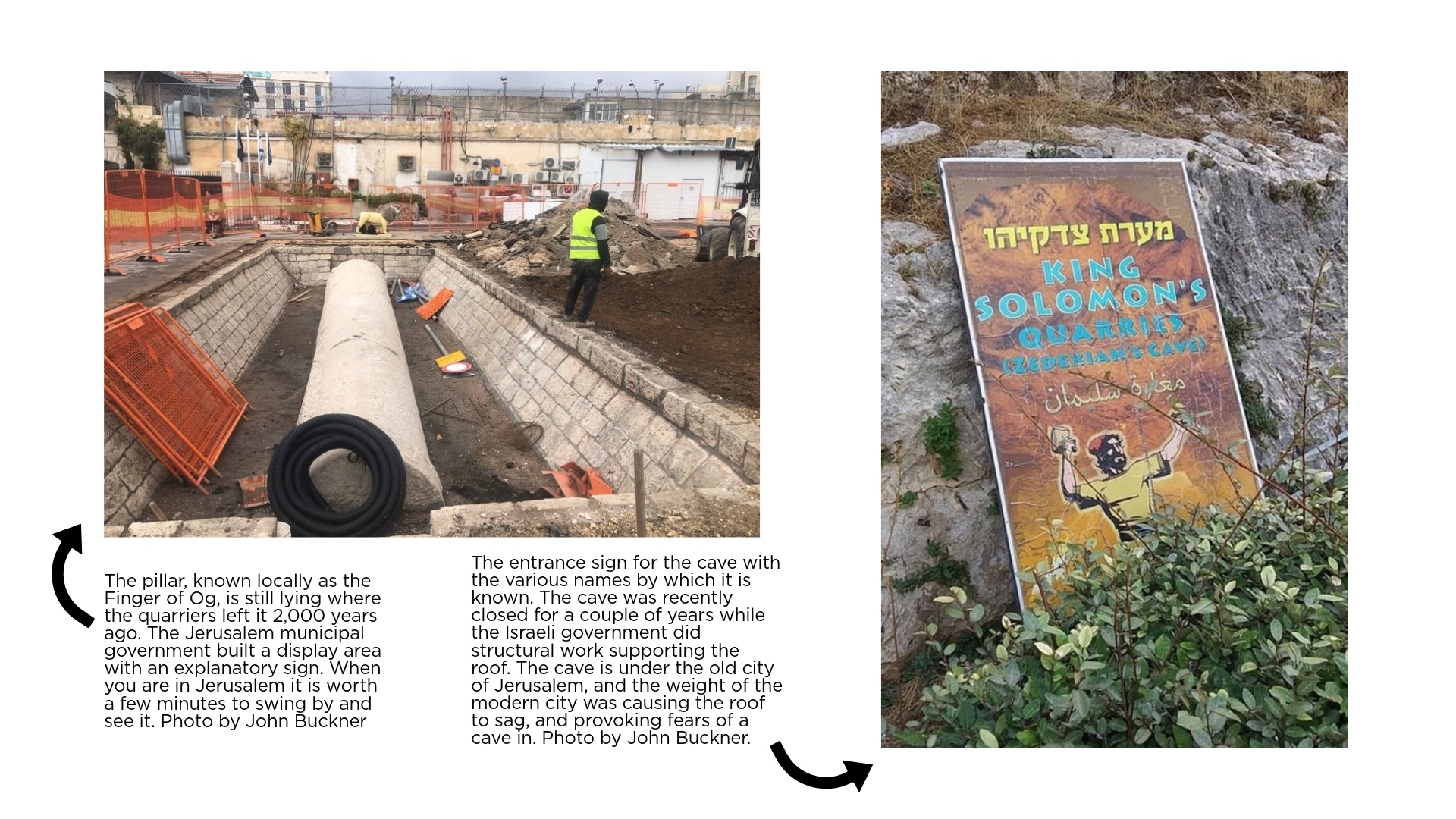
The pillar, known locally as the Finger of Og, is still lying where the quarriers left it 2,000 years ago. Also, the entrance sign for the cave with the various names by which it is known.
Discover more from Enjoying the Journey
Subscribe to get the latest posts sent to your email.