
On a recent vacation to Japan, I visited Kobe, the capital city of Hyogo Prefecture. This area is perhaps most famous for Kobe beef, a delicacy produced under strict conditions and valued for its flavor. There was much to see (and eat) in this city, and one area I explored was the Kitano-cho area of the city. This area contains many Western-style houses (Ijinkan) from foreign diplomats and traders who lived there and oversaw the trade in and out of the port of Kobe. The homes, filled with period furniture, artwork, and other items, are now open to tourists to explore.
The tour guides in this area refer to some of these homes as “power spots” that offer the opportunity for visitors to obtain luck or favor bestowed by the gods. Though the country is very modern and filled with cutting-edge technology, the people of Japan can be very superstitious, and these areas can become crowded with people who are seeking to have their desires met.
The Bible makes it clear that blessing comes from one source — God. No works or rituals of our own power and strength can ensure that we receive our desires. Let us examine three of the “power spots” in this area to illustrate this point.
LOVE
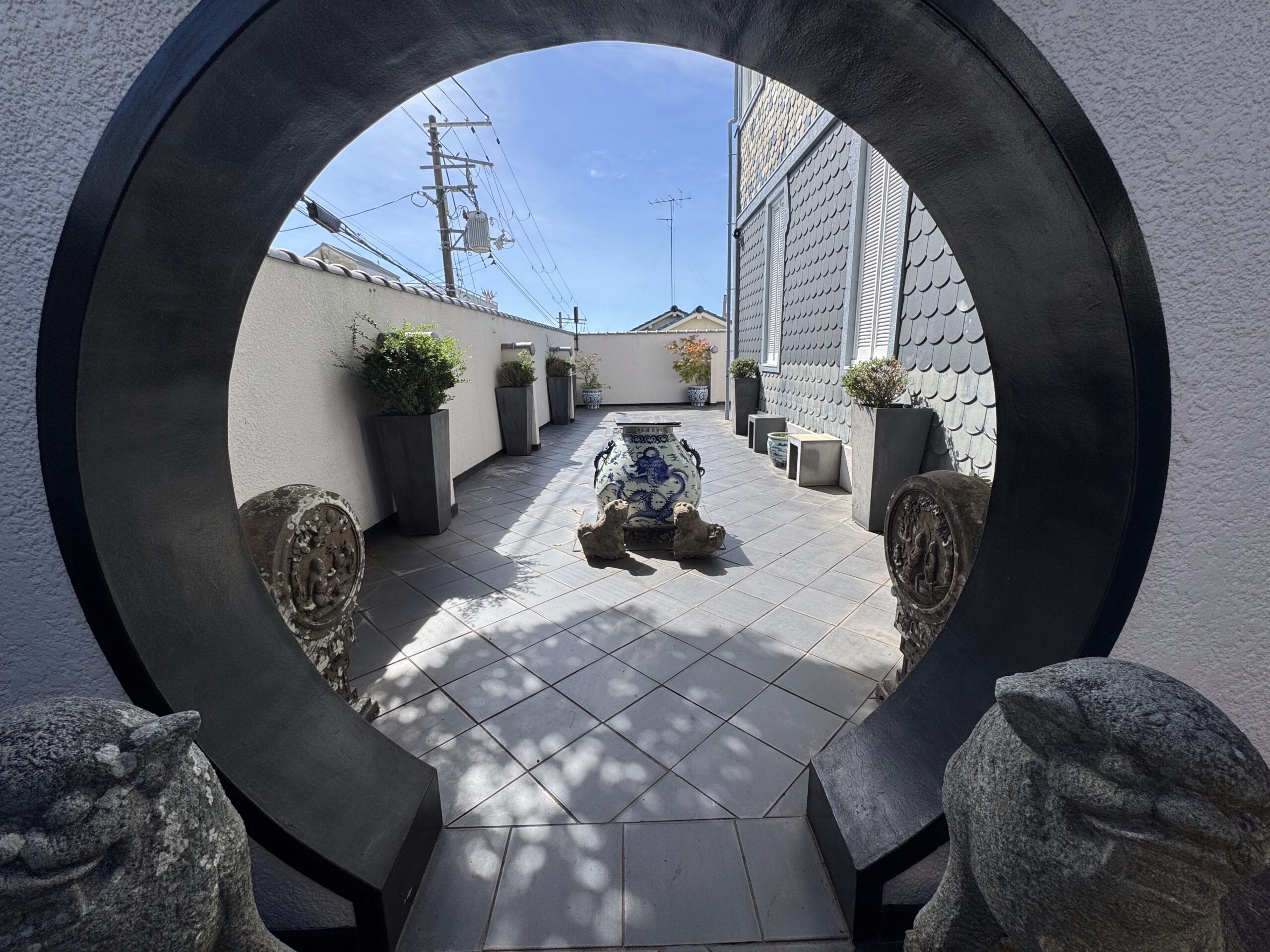
The arch with Komainu, or guardian lion-dog statues, on either side at the Hilltop House.
One home, known as the Hilltop House, was at one time used as the Chinese Consulate. It is full of many works of Chinese art and expensive furniture. The house features a distinctive arch with Komainu, or guardian lion-dog statues, on either side. These statues are located at the entrance to Japanese Shinto shrines, and some believe that they ward off evil spirits. The superstition associated with this location is that if you walk through the arch, you will have success in your love life.
A Biblical Perspective on Love
God’s Word has much to say on the subject of love. The first section of the Bible we often think of is 1 Corinthians 13, the famous passage on ‘charity,’ or love. Here, Paul gives the attributes of charity. It is long-suffering and kind, does not envy or puff itself up, cannot be provoked easily, and does not think in an evil way. It does not rejoice in sin, but in the truth; it bears, believes, hopes, and endures all things. Love never fails. God is love (1 John 4:8). He loves us with a perfect love, and He so loved us that He gave His Son to die on the cross for our sins.
Seeking a partner in life, a help meet for us, is a good, God-given desire. In Genesis 2:18, God recognized that, “…It is not good that the man should be alone; I will make him an help meet for him.” God designed marriage for companionship and to equip a husband and a wife to be capable of serving God better than they can without each other. (Read more about this in Scott’s book, New Testament Marriage.) But rather than going through a ritual to find love, we should first learn to love God as we should, and then follow His guidance and will for our lives as we seek to find our spouse so that we can love them in the way that God intended. We cannot force or rush this process. We must be content with God’s will and God’s timing.
LUCK

A bronze statue of a Calydonian Boar, a creature featured in Greek mythology.
Another home, known as the Uroko House, derives its name from the overlapping shingled siding that resembles fish scales. The property includes a garden with a bronze statue of a Calydonian Boar, a creature featured in Greek mythology. This statue has the nickname Porcellino, and the superstition associated with it is that visitors will receive good luck if they rub its snout. The superstition is very popular, as is evident when viewing the statue. The snout of the statue is polished and shiny from the many people who have rubbed it, while the rest of the statue has a green patina developed over the years.
A Biblical Perspective on Luck
As Christians, we know that there is no such thing as luck. We read of passages in the Bible that were misinterpreted by others as luck, such as the story of the Pool of Bethesda, but this is not an example of luck. The Bible does speak of chance, but it provides the proper explanation for what others refer to as luck. Proverbs 16:33 says, “The lot is cast into the lap; But the whole disposing thereof is of the LORD.” Think of a lot as a die that is tossed. God’s sovereignty is such that He is aware of what the outcome will be even before it happens. Through God’s providence and working through His active and passive will, God directs His creation to enact His will. Having an awareness of God’s providence in our lives helps us to see His unseen hand in our circumstances.
We see God’s active will in the death of the wicked King Ahab in 2 Chronicles 18:33-34. A man drew a bow ‘at a venture,’ and hit Ahab in a vulnerable spot in his armor. To those who were unaware of God’s providence, it may have appeared to be bad luck. However, 2 Chronicles 18:18-22 demonstrates that God was working in His providence to bring this event to pass.
We see God’s passive will in the lives of Job and Joseph, two men who suffered misfortune not because of anything that they did, but because God permitted it to bring about His sovereign will. Joseph did not recognize until later that God had used his seeming misfortune to bring about a greater good in the life of his family and the people of Egypt (Genesis 50:20).
WISHES

An image of Saturn’s chairs.
Within one home are a pair of chairs that are the source of a unique superstition. Known as Saturn’s chairs, the superstition is that if a woman sits in a chair on the right, or a man sits in the chair on the left, and makes a wish, that wish will come true. This may seem silly to you and me, but at the height of the popularity of this superstition, visitors waited up to two hours for the opportunity to sit in a chair and make their wish. The chairs get their name from their proposed association with the Roman god Saturnus, god of abundance and fruitfulness.
A Biblical Perspective on Wishes
Though we do see the word ‘wish’ in a few Bible verses, this is never meant to give the idea of one making a wish in a pagan or superstitious manner. Other Bible verses translate this word as ‘pray,’ and thus the proper understanding is that it is the prayer, the earnest desire of the petitioner, for a specific need.
When we pray, we should seek to pray in God’s will and not our own. We should also pray expecting God to answer our prayer, as Jesus directed His followers in Mark 11:24: “Therefore I say unto you, What things soever ye desire, when ye pray, believe that ye receive them, and ye shall have them.” This is not to say that we should be praying outside of God’s will, as God is under no obligation to answer a selfish prayer or one that does not accomplish His will. Indeed, there are many times in life when I can look back with gratitude that God did not answer a specific prayer of mine, because the answer I eventually received was much better than the answer that I thought I wanted to receive.
The Blessed Life
It is natural to seek love, prosperity, and to meet our needs. However, we do not need to walk through a specific arch, sit in a specific chair, or rub the snout of a particular statue to achieve these goals. The Bible provides practical wisdom for every aspect of our lives, including how to live a truly blessed life.
Matthew 7:7-11 teaches us that we need only ask God to provide our needs, and He will provide them. Note again that this is not to say that He will provide our every want and selfish desire. But God knows what you need even before you ask Him.
Psalm 84:11 teaches “For the LORD God is a sun and shield: The LORD will give grace and glory: No good thing will he withhold from them that walk uprightly.” Don’t miss the end of the verse: “them that walk uprightly.” In other words, if we are not living as we should, if we are not walking uprightly in His sight, we should not expect God to bless our lives. God cannot bless disobedience, rebellion, or sin.
Ephesians 1:3 reads, “Blessed be the God and Father of our Lord Jesus Christ, who hath blessed us with all spiritual blessings in heavenly places in Christ:” We might focus on our physical blessings, but we must not lose sight of the spiritual blessings in heavenly places we have in Christ. We have hope, peace, joy, contentment, and eternal life. These are blessings that cannot fade away, no matter what takes place in our brief lives on this earth.
Blessings Come From God
Psalm 37:4 tells us, “Delight thyself also in the LORD; And he shall give thee the desires of thine heart.” The key to receiving our heart’s desires is to desire God’s heart — to desire that our hearts will be like His. When we love what God loves, hate what God hates, and delight ourselves in God, we are guaranteed to receive the desires of our hearts – because our desires align with His.
By pursuing Christ and abiding in Him, we can rest in Him and His blessings on our lives. (Click HERE to read a chapter on the blessed life from Psalm 1.) Thank the Lord today for all that He has done for you, seek His will for your life, and enjoy the many blessings that He provides.
Related Message: The Blessing
Discover more from Enjoying the Journey
Subscribe to get the latest posts sent to your email.