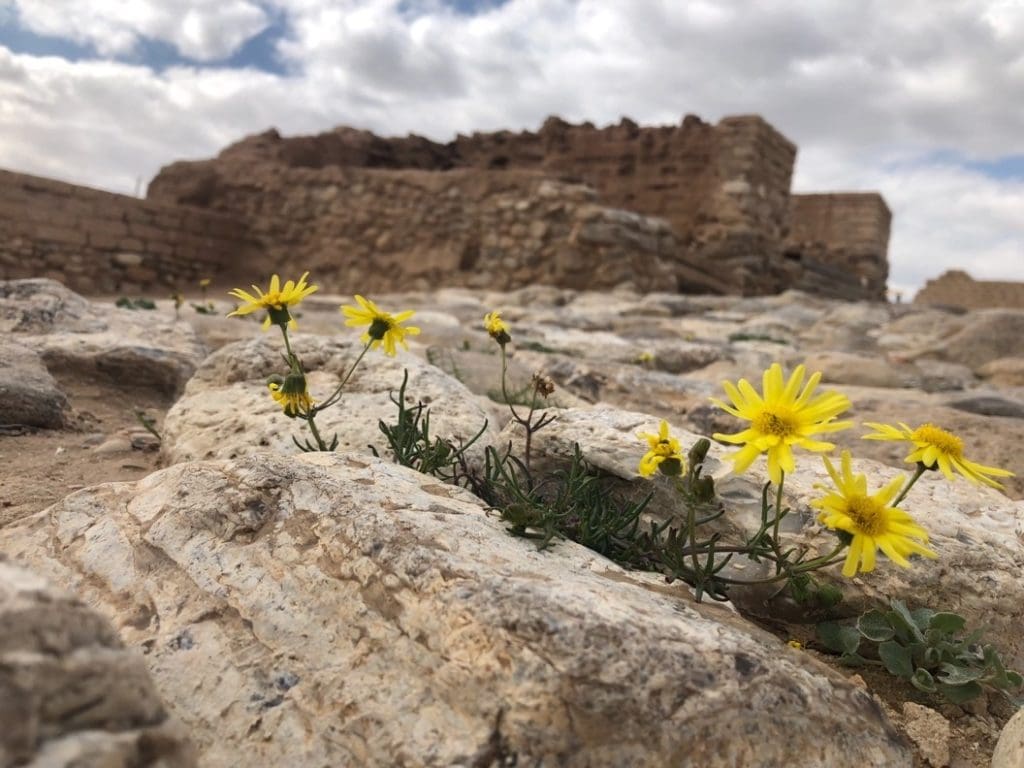
Beersheba
“And Abraham set seven ewe lambs of the flock by themselves. And Abimelech said unto Abraham, What mean these seven ewe lambs which thou hast set by themselves? And he said, For these seven ewe lambs shalt thou take of my hand, that they may be a witness unto me, that I have digged this well. Wherefore he called that place Beersheba; because there they sware both of them. Thus they made a covenant at Beersheba: then Abimelech rose up, and Phichol the chief captain of his host, and they returned into the land of the Philistines” (Genesis 21:28-32).
The Account at Beersheba
In the dry lands of the Negev, the southern desert of Israel, water is precious due to the scarce rainfall. Beersheba only receives an average of 5.2 inches of rain per year. However, both the ancient and modern cities of Beersheba were situated on rivers that flow during the winter rains in the hills to the north. The city of Hebron, which is only 26 miles to the north in the central highlands, receives an average of 42 inches of rain per year.
When Abraham’s journeys brought him to the region, he dug a well. In antiquity, residents of the area learned that despite the aridity of the region, wells could tap into aquifers deep in the earth. Abraham’s well caused conflict with the followers of the Philistine king Abimelech, who fought with his servants and violently took it over. However, the king, probably little more than a local warlord, saw God’s blessing on Abraham. So he and his followers came to the great patriarch and sought his covenant friendship. As part of the covenant, Abraham gifted numerous livestock to the king. Abimelech noted that Abraham set seven female lambs apart and asked for an explanation. Abraham responded that the seven lambs were a witness that the well belonged to him. The men then swore a covenant and as a result the place was called Beersheba.
The Meaning of Beersheba
The name Beersheba comes from the similarity between two Hebrew words sheba, or seven, and shaba, which means an oath. So it is the well, the be’er, where they swore an oath upon seven lambs. Most likely, the oath was broken up into seven parts, each sealed by the sacrifice of one of the chosen lambs. The men parted friends, and Abraham lived by the well. (Genesis 22:19)
After Abraham died, the Philistines stopped up the wells that he dug, which was a violation of their covenant of friendship. In Genesis, the oath was not just for Abraham and Abimelech, but also their sons and grandsons. Isaac came along and cleared them out, resulting in more conflict with the local Philistine warlords. His servants dug again the well at Beersheba, and told Isaac “we have found water.” (Genesis 26:32) In honor of his father’s covenant with the seven lambs, Isaac called it Shebah, another word for seven.
The story of Abraham’s wells teaches us that God provides, even in the dry parts of the promised land. Sometimes that provision was hidden, and required some hard work to access. He passed them on to his son Isaac, who removed the filth that the enemy had poured into the wells. Isaac in turn passed them on to his son Jacob, later known as Israel. Is there a well you need to dig? Are you asking God to provide water in a dry land, but are unwilling to put in any shovel work? Is there a blessing from previous generations that you need to return to, clear out, and pass down to your children?
“And Israel took his journey with all that he had, and came to Beersheba, and offered sacrifices unto the God of his father Isaac” (Genesis 46:1).
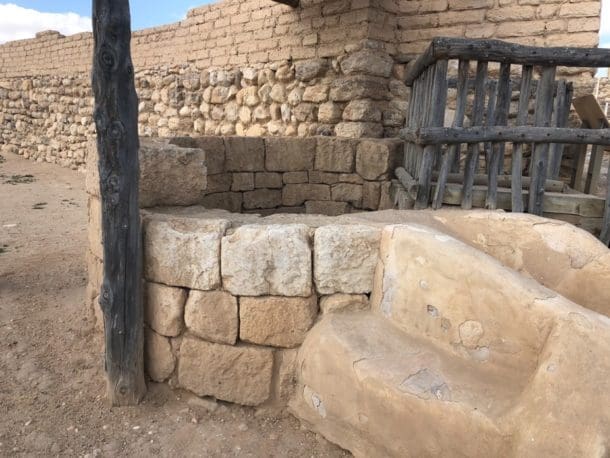
The well at Tel Beer Sheva, the archeological site of biblical Beersheba. The well at the entrance to the ancient city has been associated with Abraham. It has not been fully excavated. An archeological team dug down over 220 feet, but judged it too dangerous to continue due to the risk of a cave-in. it took a great deal of work for the Philistines to stop up Abraham’s wells and violate their covenant. Photo by John Buckner
Discover more from Enjoying the Journey
Subscribe to get the latest posts sent to your email.