Flowers of the Field
“The voice said, Cry. And he said, What shall I cry? All flesh is grass, and all the goodliness thereof is as the flower of the field: The grass withereth, the flower fadeth: because the spirit of the Lord bloweth upon it: surely the people is grass. The grass withereth, the flower fadeth: but the word of our God shall stand for ever.” Isaiah 40:6-8
In Isaiah 40, God speaks peace to His city, Jerusalem. He speaks of the coming of John the Baptist, the forerunner of Jesus, in verse 3: “The voice of him that crieth in the wilderness, Prepare ye the way of the Lord, make straight in the desert a highway for our God.” Then He reminds us of what is eternal, and what is not. We are told that we are like grass, and our beauty is fleeting, like the flower of the field.
Nearly every page of the Hebrew Bible has delightful, thought-provoking puns and wordplay. This passage is no exception. Isaiah writes that the spirit (ru’akh) blows on the flowers and causes them to fade. Ru’akh in the Bible can mean either spirit or wind, and Isaiah seems to be playing with both meanings here. This is the same ru’akh, the same Spirit that hovered over the waters of creation, and at the end of the Bible calls for all to come to the water of life.
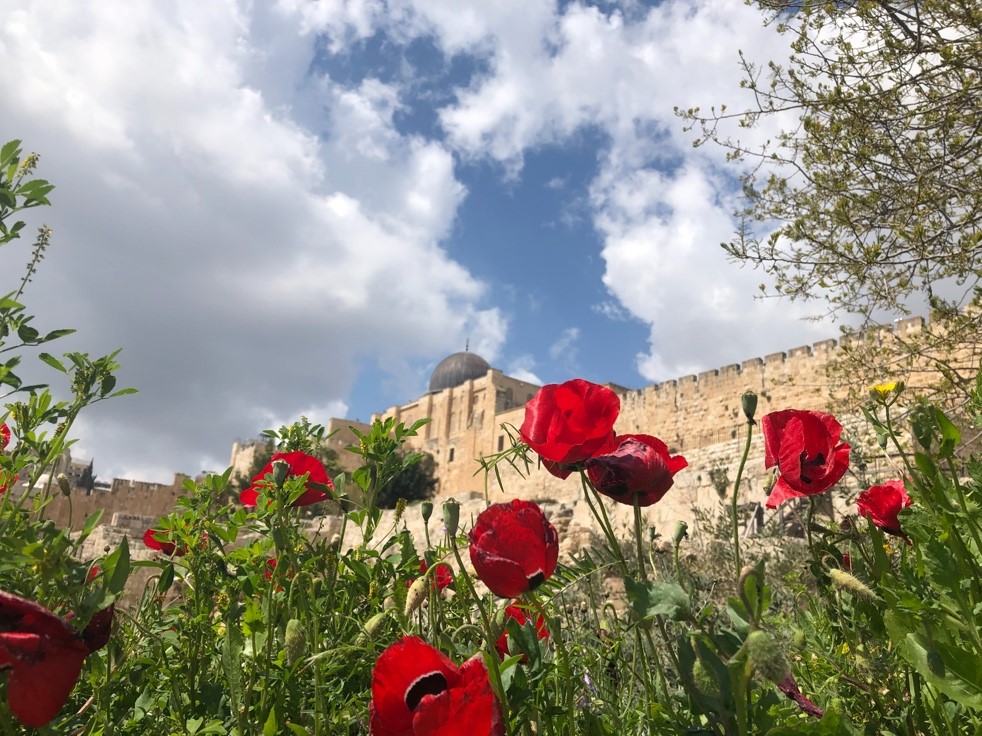
Spring in the Holy Land is gorgeous, with the rains causing even the deserts to suddenly bloom with flowers. One remarkable flower is the poppy, the national flower of the modern nation of Israel. They carpet the hills with red, but the burst of color is short-lived. They only last for about two or three days. Many ancient writers believed that the prophet Isaiah was inspired to write of the poppy when he penned chapter 40. In the metaphor, this beautiful but fragile flower is us. We bloom for a short time, then we pass away. After the rains, the dry season comes to Israel. The flowers die, and the grass withers.
An Eternal Truth from Fading Flowers
All flesh is like the poppy. The beautiful poppy quickly fades, and the same is true of our own beauty. However, we have something eternal to which we can cling: the Word of God. I challenge you to turn your eyes from the poppies of the world and instead look to the unchanging Scriptures. Generations rise and fall. People are born, live, and then die, but God’s truth stands unchanged. Are you trusting in the eternal Word of God? It is a constant temptation to turn our eyes from the permanent and become obsessed with the soon-faded flowers of this world.
Have you trusted in the Word made flesh? In Jesus Christ, the Savior of the world? If you have not, I urge you to do that before your time comes to wither and fall to the ground in death. If you have not placed your faith in Him, please know that the same Ru’akh, the same Spirit who was present for the creation of the world, who blows on the flowers and the grass, is calling for you to come to eternal life. “And the Spirit and the bride say, Come. And let him that heareth say, Come. And let him that is athirst come. And whosoever will, let him take the water of life freely.” Revelation 22:17
“For all flesh is as grass, and all the glory of man as the flower of grass. The grass withereth, and the flower thereof falleth away: But the word of the Lord endureth for ever. And this is the word which by the gospel is preached unto you.” I Peter 1:24, 25
Discover more from Enjoying the Journey
Subscribe to get the latest posts sent to your email.