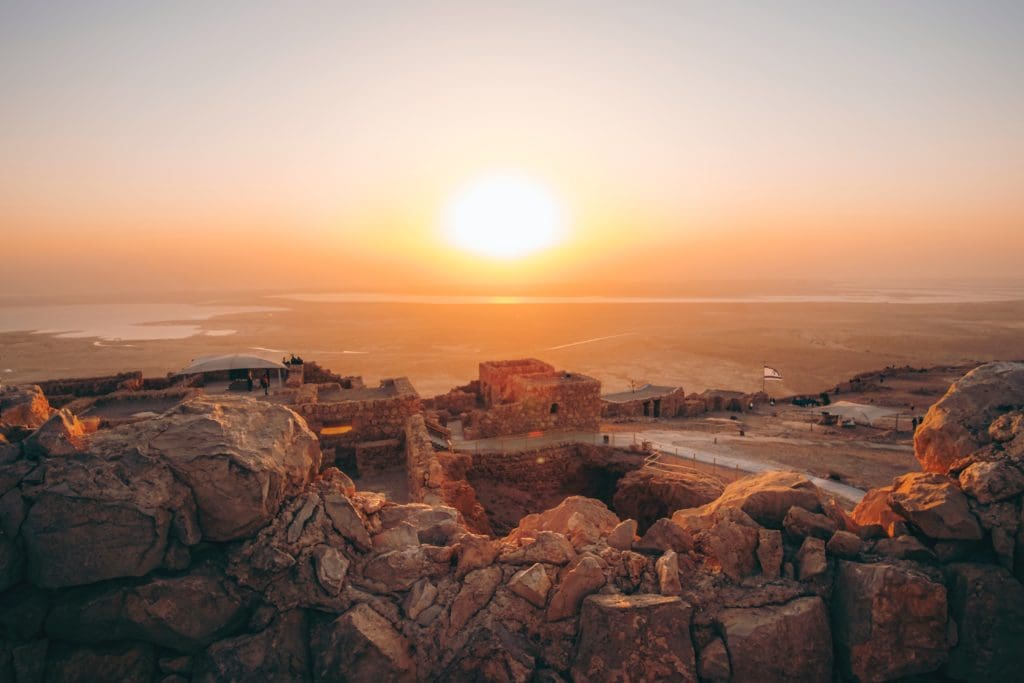
Today our family and a group of friends are walking in the land of our Lord. In a very real sense, all land belongs to the Creator. Psalm 24:1 declares, “The earth is the Lord’s, and the fulness thereof; the world, and they that dwell therein.” Soon the Lord Jesus Christ will be given the title deed to the earth and will claim that which is rightfully His (Revelation 5:1-14)!
Yet this little piece of land is special. Think of it: an area roughly the size of the state of New Jersey holds the key to the study of history, theology, and prophecy! It is…
- “the land of Canaan” (Genesis 17:8),
- “a land flowing with milk and honey” (Exodus 3:8),
- “the land of Israel” (Ezekiel 11:17),
- “the glorious land” (Daniel 11:16, 41),
- “the LORD’s land” (Hosea 9:3),
- “the holy land” (Zechariah 2:12).
- “the pleasant land” (Zechariah 7:14),
- “the land of promise” (Hebrews 11:9).
The one thing that makes any place special is its connection with people who you love. This land is significant, not just because of the many Old and New Testament characters who lived here, but because this is the place where our Lord Jesus Christ lived, died, and rose again. We visit it now, but He will reign here soon.
As we study Bible geography we understand more about both the Word of God and the God of the Word. Geography has been called “the eye of history.” Through basic geography students discover much about people groups and civilizations. How much more when those places are connected to God’s eternal purpose in the world!
Israel was placed in a very central location between two dominant ancient empires – Babylon and Egypt. God strategically positioned His people in the crossroads of the ancient world. This land was a connector of three continents, a bridge between Europe, Africa, and Asia. From the beginning, God’s intent was that from this land His name would be made known around the globe. God wants to be known.
As we acquaint ourselves with Scripture our great desire is not simply to know people and places, but to discover God’s purpose. It is our prayer that you will take a fresh look at the Word and ask the Lord to help you know Him in a greater way.
(One resource that has been a helpful tool to me in the study of Bible geography is a pictorial guide published by the Museum of the Bible: 99 Astonishing Cities and Civilizations Found in the Bible.)
Follow along as we post daily updates from our current tour through the land of the Bible. You may subscribe to our Instagram (@cspauley) or ministry Facebook page (DrScottPauley).
-SP
Discover more from Enjoying the Journey
Subscribe to get the latest posts sent to your email.