
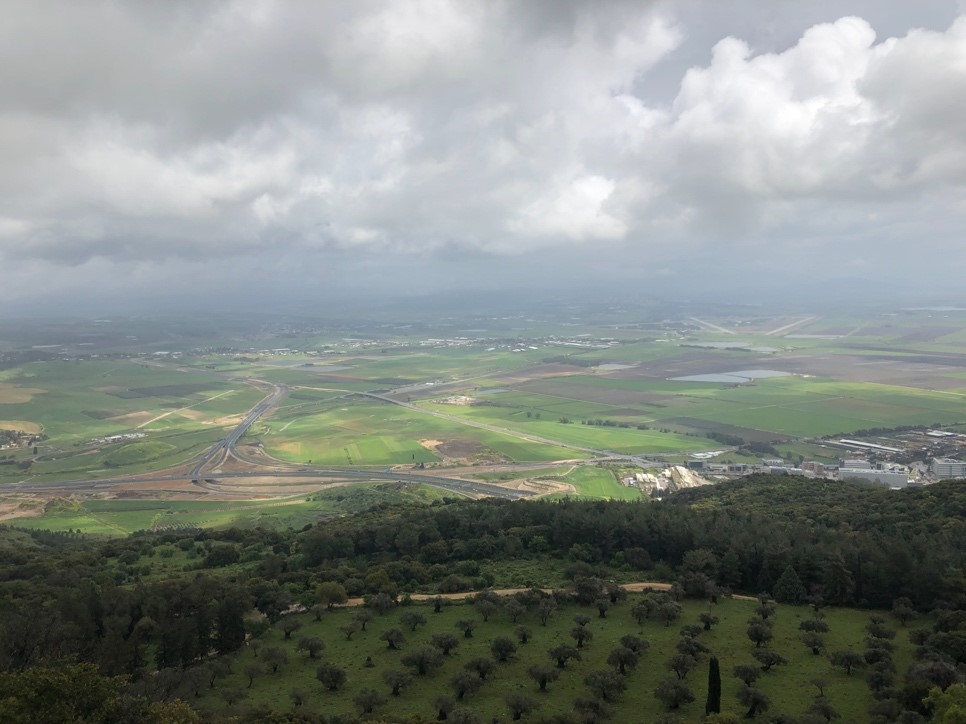
Mount Carmel in the Bible
“Now therefore send, and gather to me all Israel unto mount Carmel, and the prophets of Baal four hundred and fifty, and the prophets of the groves four hundred, which eat at Jezebel’s table. So Ahab sent unto all the children of Israel, and gathered the prophets together unto mount Carmel. And Elijah came unto all the people, and said, How long halt ye between two opinions? if the Lord be God, follow him: but if Baal, then follow him. And the people answered him not a word.” I Kings 18:19-21
The prophet Elijah called for a showdown between the God of Heaven and the prophets of Baal. The confrontation took place on top of Mount Carmel, which is located on the coast of Israel in Galilee. Each side was to choose a bullock, and whoever received an answer by fire would be the winner.
An old Jewish tradition that has no basis in Scripture, but is still interesting to learn about, holds that the prophets of Baal attempted to cheat by hiding an accomplice inside the altar. According to the legend, he was charged with lighting the underside of the wood, and thus create the illusion of a miracle, before sneaking out. According to them, this is who Elijah was talking about when he suggested that they shout louder, and maybe the god was asleep. The most common version of the legend says that the cheat was bitten by a snake sent by God and died.
God’s Altar on Mount Carmel
God already had a neglected altar on top of Carmel, it just needed to be restored. The Bible says that Elijah “repaired again the altar of the LORD that was broken down.” (18:30) That is where Elijah prepared his offering. The pagan Roman writer Suetonius tells us that the Roman general Vespasian “consulted the oracle of the divinity on Carmel” during the First Jewish War in the 60s AD. There, he received a revelation that he would become the Emperor of Rome.
This prophecy was later confirmed to him by his Jewish prisoner Josephus at Jotapata in Galilee. We cannot know if Vespasian prayed to the God of Heaven on top of Carmel, but we do know that He had an altar there, and the prophecy came true.
To negate any allegations of cheating on his part, especially during a major drought, and to demonstrate the power of the true God, Elijah had the entire altar thoroughly soaked with water. In contrast to the spectacle presented by the jumping, screaming, bleeding priests of Baal, Elijah stood by God’s altar and prayed a simple prayer. That is when the fire fell down from on high. The fire of the LORD was so intense that it burnt up the sacrifice and the altar under it!
The Lesson of Mount Carmel
Mount Carmel teaches us as believers that God answers prayer, whether you are a regular person, a prophet of the LORD, or an erstwhile Roman general. Elijah put himself in a precarious place, but he trusted that God would answer prayer and show Himself strong. (Read: A Man Like Us In Times Like Ours.) We should learn from this and be willing to have confidence in our Lord. Carmel also shows the unbeliever who is the true God, and to beware of coming judgement. Will you trust in the God of Elijah?
LISTEN: You Have To Choose
Discover more from Enjoying the Journey
Subscribe to get the latest posts sent to your email.

Thank you so much for sharing. I have just been reading/studying this passage, and the Lord brought this post across path today. Thank you again!