God’s Seat
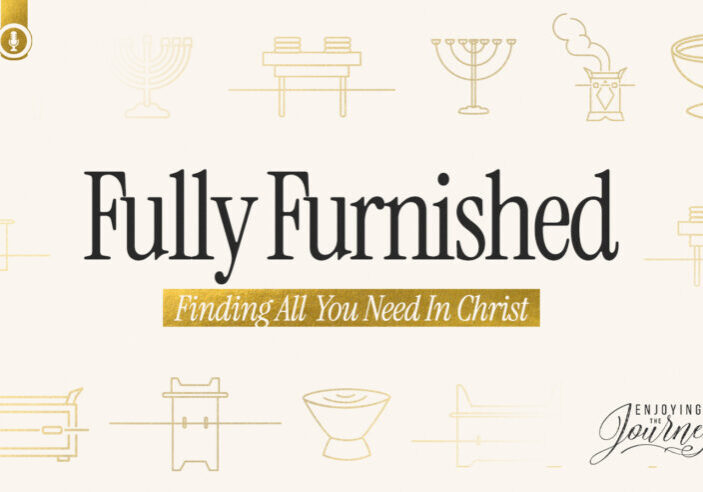
(Hebrews 9:2-5, 11-12; 10:12-13) What if the safest, most intimate place with God is closer than you think? In this final episode of the Fully Furnished series, Discover how the...
Joining Jesus At the Throne of Grace
(Hebrews 7:25; 9:24) Intercession shapes both the one who prays and the one being prayed for. Intercessory prayer Is both a privilege and an assignment. Christ lived praying, died praying,...
Don’t Miss the Mercy Seat!
(Exodus 25:10-11, 16-22) Today's study of the furniture of the tabernacle takes us beyond the veil into the Holy of Holies to the Ark of the Covenant and the Mercy...
3 Ways to Approach God
(Exodus 30:6-9) In a culture filled with casual and flippant attitudes toward God, the altar of Incense calls us back to reverence. Learn why we must come clean, bring pure...
God’s Safe Place
(Psalm 18:2; 118:27) The safest place in your life is not a physical location. Join the study on the horns of the altar of Incense and discover why those who...
Look What’s On the Altar!
(Exodus 30:7-10) An altar is a place where things die. The altar of incense calls us to lay down our independence and pride in prayer. Learn how the blood of...
An Altar of Prayer
(Exodus 30:1-6) From the shining light of the candlestick, we now step to the fragrant altar of Incense, the central altar of prayer standing directly before the veil. You must...
The Light of the Servants of God
(Matthew 5:14-16) Israel was called to be God’s light to the nations — and now the Church is commissioned with that same calling. Discover how this beautiful piece of tabernacle...
The Light of the Spirit of God
(Isaiah 61:1-3) Do you need light today? The golden lampstand’s continual burning, fueled by pure olive oil, foreshadows both the Son as the Light of the world and the Holy...
The Light of the Son of God
(John 1:7-9) One single light fixture stood in the Holy Place — 75 pounds of pure gold, burning continually, illuminating everything. In this study, Scott Pauley takes us to the...
Let There Be Light!
(Exodus 25:31-40) In the darkness of the holy place, there was only one source of light — the golden candlestick. Every detail of the Old Testament tabernacle’s golden candlestick (menorah)...
The Priests Are Always Nourished
(Leviticus 24:5-9) You never leave God’s table hungry. Join Scott as he focuses on the table of showbread — the bread before God — where the priests were not only...
The Bread Is Always Fresh
(Leviticus 24:5-9) The freshness of the showbread is a picture of Christ and God’s perennial provision. The twelve loaves of bread — one for each tribe — underscores God’s personal,...
The Table Is Always Set
(Exodus 25:23-30) No one sets a table like the Lord! The table of showbread, a piece of furniture from the tabernacle pictures constant, intimate fellowship with Jesus. Discover how Christ...
Bread of the Face
(Exodus 25:23-30) Showbread literally means "the bread of the face," and the table of showbread in the Holy Place symbolizes fellowship with God: coming before His face, receiving His provision,...
Look At Yourself!
(Exodus 38:8) The design of the brazen laver points directly to Jesus and the lifelong work of sanctification. Made of brass and lined with mirrors, the wash basin calls us...
God’s Wash Basin
(Exodus 30:17-21) The brazen laver, the brass washbasin placed between the altar and the Holy Place, points directly to Jesus and the ongoing work of sanctification. Though our salvation is...
Have You Been to the Altar?
(Exodus 38:1-2) The brazen altar is a picture of Christ’s substitutionary work on the cross. The altar is full of symbolism: the wood as Christ’s body and the brass as...