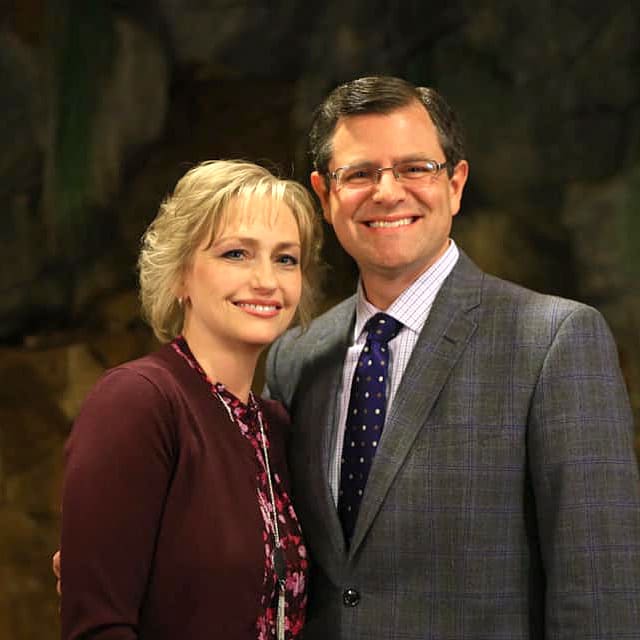

It was a sunny, crisp fall day when Tammy and I visited the Mountain Grove Cemetery in Bridgeport, Connecticut. Our trip to the historic cemetery was purposeful – to visit the grave of the prolific songwriter Fanny Crosby.
Fanny was the blind author who penned more than 3,000 hymns and poems that are still used in churches around the world. Her story is a story of faith and the grace of God. In a very old section of the cemetery, we found the little plot where her body was laid in February 1915.
The humble marker erected by “friends to whom her life was an inspiration” was simple. Beneath the dates reflecting her 95 years on earth are the words of arguably her most famous song:
Blessed assurance, Jesus is mine!
Oh what a foretaste of Glory Divine!
Heir of salvation, purchase of God
Born of the Spirit, washed in His blood.
Two Markers: Fanny Crosby and P.T. Barnum
Just across from Fanny’s grave is one of the most impressive memorials I have ever seen. It is the burial place of the famed P.T. Barnum. His name, often associated with Ringing Brothers and Barnum and Bailey Circus, was a household name in Fanny’s day. Barnum was a politician, temperance advocate, businessman, and, above all showman, as seen in the film The Greatest Showman. The entrepreneur was immensely accomplished and became one of the wealthiest men of his generation.
See the two grave markers below:

Images of the two grave markers. Fanny Crosby (Left) and Barnum (Right)
Fanny and Phineas Barnum were friends, but their testimony was markedly different. Barnum claimed some faith, and the footer of his grave reads, “Not my will but thine be done.” However, his theology and belief in universal salvation were simultaneously consistent with his desire that all men be saved and contradictory to the plain teaching of Scripture.
Two Memorials: One Eternal and One Temporal
Barnum helped to build Bridgeport and even designed the cemetery where he and Fanny are now buried. But, as I stood in that little lane looking at the two very distinct memorials, I was struck by the stark difference in their lives.
Barnum lived for this world. He even asked the newspaper to release his obituary before he died so that he could read it! Fanny lived for the world to come, and her testimony continues to impact this world because of it.
The greatest record is not what others say about our lives, but what our Lord will say when we meet Him in judgment. And the greatest memorial is not a magnificent monument, but the influence of our testimony pointing others to Christ. In the end, the real issue of life is not what we achieve, but what we are used of God to set in motion.
“And the world passeth away, and the lust thereof: but he that doeth the will of God abideth for ever” (1 John 2:17).
Discover more from Enjoying the Journey
Subscribe to get the latest posts sent to your email.