Sitting Under Your Fig Tree
“Jesus saw Nathanael coming to him, and saith of him, Behold an Israelite indeed, in whom is no guile! Nathanael saith unto him, Whence knowest thou me? Jesus answered and said unto him, Before that Philip called thee, when thou wast under the fig tree, I saw thee.” (John 1:47-48)
Listen to this Account on Traveler’s Tales:
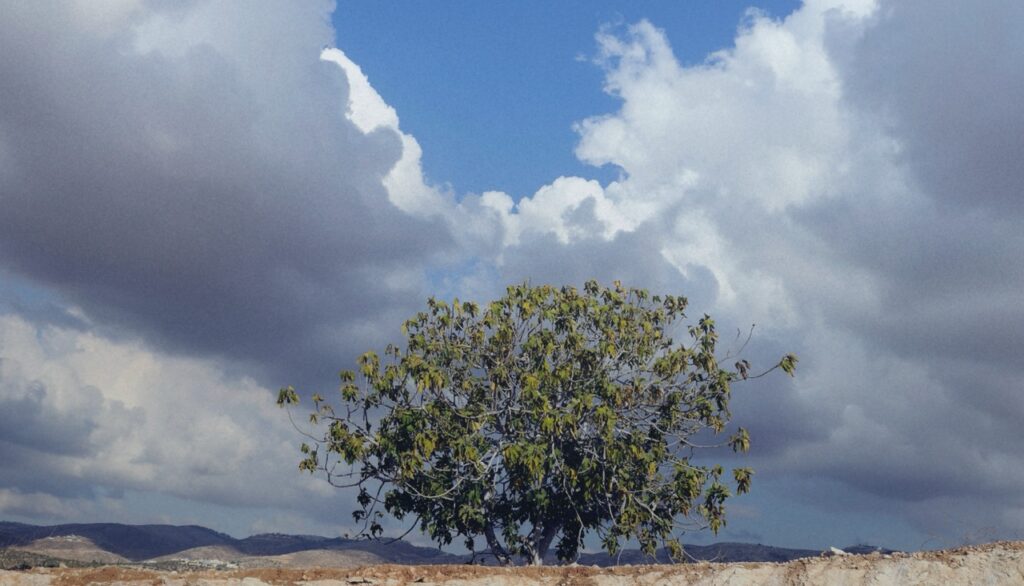
Nathanael’s choice of where to sit was not random.
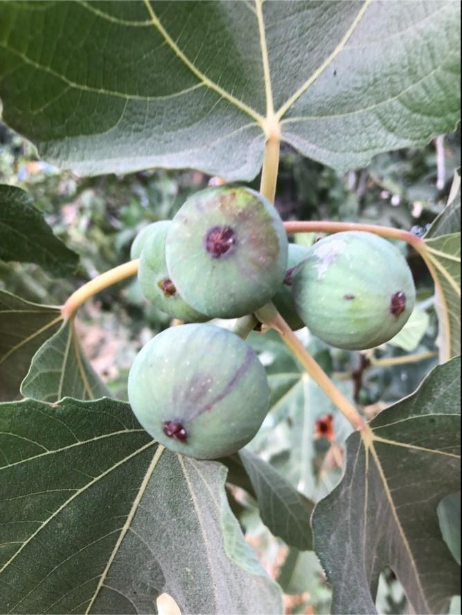
Unripened figs in the Hinnom Valley, just west of the old city of Jerusalem. Figs are technically not a fruit, but rather an inverted cluster of flowers. They require fertilization by a type of wasp. The female wasp crawls inside of the fig while covered in pollen, and dies. The dead wasp is then absorbed into the fig. Photo by John Buckner
Instead, it gives us a glimpse into his faith in Israel’s Messiah. Jesus saw his faith and praised him for it. We are told by two of the minor prophets that one of the characteristics of the coming Messianic Age will be people peacefully spending time under their fig trees. Zechariah used words reminiscent of Isaiah as he described a vision of the high priest, Joshua, and the coming BRANCH, the servant of the LORD. When He comes, we are told, “In that day, saith the Lord of hosts, shall ye call every man his neighbour under the vine and under the fig tree.” (Zechariah 3:10).
For his part, Micah wrote that on that day the mountain of the LORD’s house will be exalted, and the house of God. Nations will cease from war and turn their swords into plows. In that golden future, “neither shall they learn war any more. But they shall sit every man under his vine and under his fig tree; and none shall make them afraid: for the mouth of the Lord of hosts hath spoken it” (Micah 4:3b-4). (Download: 55 Prophecies Jesus Fulfilled.)
That future time that the prophets wrote of hearkens back to the reign of Solomon, when the kingdom of Israel was at its zenith. “And Solomon reigned over all kingdoms from the river unto the land of the Philistines, and unto the border of Egypt: they brought presents, and served Solomon all the days of his life…..And Judah and Israel dwelt safely, every man under his vine and under his fig tree, from Dan even to Beersheba, all the days of Solomon” (I Kings 4:21, 25). The apocryphal (not inspired) Book of Maccabees used this same phrasing to show that Israel experienced a period of peace under the wise rule of Simon between the testaments “He made peace in the land, and Israel rejoiced with great joy: For every man sat under his vine and his fig tree, and there was none to fray them:” 14:12).
Nathanael lived during a tumultuous period in Israel’s history.
The country was under the rule of Rome, and many people had turned away from God’s teachings. However, at the same moment, a messianic fervor swept through Israel. People were seeking signs of the Messiah’s coming, and many false messiahs presented themselves, attracting followers. However, Nathanael seems to have taken an approach that is instructive to us. He lived his personal life in full expectation of the Messiah’s arrival, and as if He had already come. Jesus, the Messiah of the nations, saw his faith and called our attention to it.
Christian, are you living in expectation of the Messiah’s coming? Does your life reflect your hope of redemption? Like in Nathanael’s day, many modern people are falling away from God or following false messiahs. We should be sitting under our fig tree every day, whether literally or metaphorically. We should, like Nathanael, spend our days looking heavenward in eager expectation of His arrival. Our Messiah will see our faithfulness and reward it.
“Whoso keepeth the fig tree shall eat the fruit thereof: so he that waiteth on his master shall be honoured.” Proverbs 27:18
Discover more from Enjoying the Journey
Subscribe to get the latest posts sent to your email.