“Through mighty signs and wonders, by the power of the Spirit of God; so that from Jerusalem, and round about unto Illyricum, I have fully preached the gospel of Christ. Yea, so have I strived to preach the gospel, not where Christ was named, lest I should build upon another man’s foundation: But as it is written, To whom he was not spoken of, they shall see: and they that have not heard shall understand” (Romans 15:19-21).
Illyricum in Bible Times
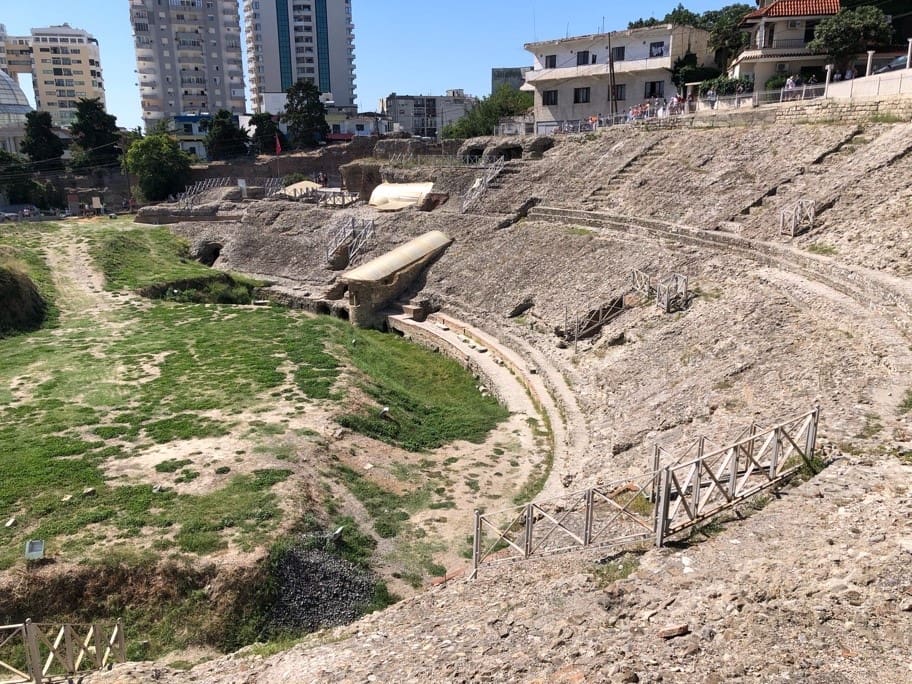
The province of Illyricum was just across the Adriatic Sea from Rome. At its closest point, Italy is only 39 nautical miles from the coast of Illyricum. The province included parts of modern Croatia, Montenegro, and Bosnia, but most of the former province is in modern Albania. Due to Illyricum’s proximity to Italy and Rome, much of the Roman Civil War between Pompey the Great and Julius Caesar was fought in modern Albania and to the south in the neighboring Epirus region of Greece.
Paul and his companions were forbidden by the Holy Spirit to preach in the province of Asia. Then they tried to go into the province of Bithynia, but the Spirit would not let them (Acts 16:6-9). Then Paul saw a vision of a Balkan man from Macedonia in the north of Greece asking for Paul to come over and help them, which he and his travel companions immediately did. According to Romans 15, Paul preached the Gospel in Illyricum, but unfortunately, he does not tell us which cities he visited. However, a local tradition holds that he preached the Gospel in the city of Dyrrachium, which is known today as Durrës in Albania. Given that it was the principal city of the province, this seems likely.
Illyricum Today
In John 4, Jesus and the disciples waited by Jacob’s well for the Samaritan woman to return with a crowd from the city. The Savior took that time to exhort His followers to lift up their eyes and look on the ripe fields of Samaria. Will you lift up your eyes and look on Illyricum? Currently, Albania is the easiest Muslim country to visit, or even evangelize in. I stood in the main square of the capital, Tirana, and handed out tracts in front of the central mosque with no trouble. Churches can operate with few restrictions, and missionaries can enter. Americans can enter and stay for a year on a tourist visa with zero paperwork. It is becoming popular for Americans to retire to Albania, due to the pleasant weather, good food, and breathtaking scenery.
The doors are open in Albania and elsewhere in Illyricum, but few workers are going. Please pray that preachers would go so that “those who have not heard shall understand.” The sad truth is that the places where Paul preached the Gospel, from Jerusalem to Illyricum, are white to harvest in our day, but not many laborers are going. Will you pray to the Lord of the harvest that He will call people into His harvest? (Consider Matthew 9:39.) Is it possible that God is calling you to follow in Paul’s footsteps and go to this part of the world? Does He want you to go to Illyricum, or perhaps to another place where Christ is not named?
“….and ye shall be witnesses unto me both in Jerusalem, and in all Judaea, and in Samaria, and unto the uttermost part of the earth” (Acts 1:8b).
Discover more from Enjoying the Journey
Subscribe to get the latest posts sent to your email.