“And the priests and the Levites purified themselves, and purified the people, and the gates, and the wall. Then I brought up the princes of Judah upon the wall, and appointed two great companies of them that gave thanks, whereof one went on the right hand upon the wall toward the dung gate:” Nehemiah 12:30-31
Nehemiah and the Dung Gate
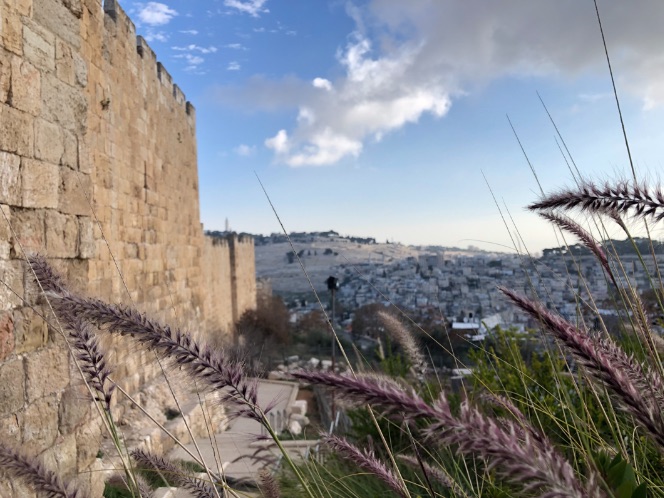
The Book of Nehemiah is concerned with the rebuilding of the walls of Jerusalem. At the end of the book, we see the celebrations as the great project is completed. The chief men of Judah and two great companies of people singing praises to God converged on the Dung Gate. From there, they seem to have walked on the walls of Jerusalem praising God for His faithfulness.
The Dung Gate was, and is even today, the primary entrance into the Temple Mount complex. In Nehemiah’s day, the Israelites would have entered here to worship God. In the following chapter, they stood in the Temple precincts to hear the holy teachings of God read aloud.
During biblical times, the Dung Gate was also how the citizens of Jerusalem removed garbage from the city. Its location near the Temple allowed for the entrance and removal of people and animals from the daily sacrifices. Interestingly, in chapter 13, we learn that Nehemiah found belongings from Tobiah, one of God’s enemies, stored in a chamber in the Temple. He threw the goods out, no doubt through the Dung Gate.
What Can We Learn from the Dung Gate?
We can learn from this that an integral part of rebuilding is to remove the refuse that God’s enemies bring into our lives. Have you allowed the world, the flesh, and the devil to put things into your life and mind? If so, I urge you to be like Nehemiah and remove the clutter of wickedness.
If you do not know Christ, the Apostle Paul labeled his own righteousness as dung (Philippians 3:8), and wrote it off. He instead chose to rest in the righteousness that can only come through trusting in Jesus. Paul wrote that everything good that he had done he counted as loss for Christ.
The illicitly stored belongings of God’s enemy, and our own righteousness, merit the same treatment: to be carried out the Dung Gate to the trash heap.
*Be sure to visit our Study Nehemiah page for all articles, messages, broadcasts, and resources from the Book of Nehemiah.
Discover more from Enjoying the Journey
Subscribe to get the latest posts sent to your email.