Scripture Memory Improves Spiritual Memory
There are all types of memory. You may have an extremely good long term memory, or perhaps your short term memory is better. This is different for every person — and it is often different at varying stages in life! There is one type of memory that all of us must constantly work at. It is our spiritual memory.
How easy it is to fail to remember the goodness of God and the wickedness of our own heart! Spurgeon said, “By some strange perversity we tend to remember what we should forget and forget what we should remember.” The best way to improve your spiritual memory is to work on your Scripture memory.
God wrote a memory Book! This is what the Word of God was given for: to help us remember what God wants us to remember and what we are so prone to forget. Scripture memory is frequently emphasized to children and young people, but sorely neglected as we get older. Yet this is the time when God’s Word most needs to be reinforced and rehearsed! Hebrews 2:1 says, “Therefore we ought to give the more earnest heed to the things which we have heard, lest at any time we should let them slip.”
The Purpose of Scripture Memorization
- Memorization is for meditation. Bible memory should not be to pride ourselves on how many verses we know! “Knowledge puffeth up” (1 Corinthians 8:1-2). Remember that the Word is to be hidden, not just in the intellect, but in the heart. When Scripture is committed to memory, you can think on it at any time. We cannot always have an open Bible, but we can continually have an open heart.
- Memorization is for application. Scripture is not just for learning – it is for living. As we rehearse the Word, it helps us to keep the will of God in view. Truth is to be known, believed, and obeyed. Consider each verse as another step in your walk with Jesus. Throughout the day, you can apply God’s Word to your life.
- Memorization is for communication. It is impossible to quote Scripture you have never committed to memory! But if the Word is planted deeply in your heart, it can be put to good use. You can quote Scripture to yourself, to the tempter, and to others who need to hear truth. Bible truth is also the beginning point of effective prayer. Talk to God about what He is talking to you about!
Take a verse each day as your prayer prompt and allow the Word to lead you to a deeper communion with Christ.
The Practice of Scripture Memorization
Here are some practical steps for memorizing Scripture:
- Memorize Scripture topically. While I have memorized longer portions of Scripture as well, I believe it is good to memorize related verses to key areas of the Christian life.
- Memorize with a friend. Partnering with a friend is beneficial for accountability and encouragement.
- Memorize out loud. Use all of your faculties to aid in memorization.
- Memorize the reference. Dr. Frank Sells used to say, “Be location conscious.” Knowing the “address” of the verse will help you to find it and take others to it quickly.
- Memorize regularly. Build it into your daily disciplines and review previously memorized verses.
Scripture Memory Program
Many years ago my friend Robert Stover asked me if I would be willing to be a Scripture memory accountability partner for a few weeks. We memorized verses specifically related to revival and quoted them to one another periodically. What a tremendous help it was to my mind and heart, and a reminder that God’s people need to be memorizing God’s Word.
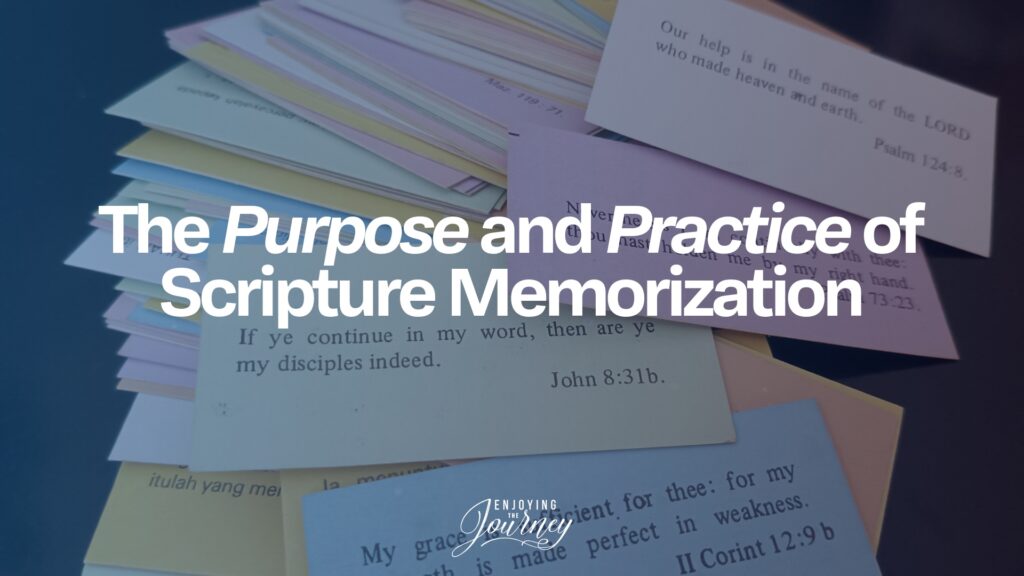
Robert has developed a wonderful Scripture memory program, complete with a card system for devotional use. Here is a brief excerpt from some of his material:
The Memory Muscle by Robert Stover
The more you exercise the muscles of your body the stronger and more fit they become. You can lift more weight, walk further, and have more lung endurance the more you exercise. Things you could not do when you started exercising become easier because you have worked these muscles.
Your memory is similar. Let’s call it your “Memory Muscle.” You try to memorize a Bible verse and it does not seem to stick with you. But, keep repeating the verse – exercise your Memory Muscle! Your Memory Muscle will become stronger and the Holy Spirit will help you to retain these verses for meditation, implementation, and communication to others.
Understand that Bible memory is hard work. Those who stick with it, and are willing to put in the work, God will richly bless with the power of His Word.
It was David, the man after God’s own heart, who wrote, “Thy word have I hid in mine heart that I might not sin against thee” (Psalm 119:11). You may take an extended portion of Scripture to memorize, such as a chapter or a book. This certainly encourages you to see individual texts in their larger context. Memorizing Scripture topically enables you to target specific subjects or areas of life that need attention.
*(If you would like to access Robert Stover’s Scripture Sets and memory tools, visit mptgministries.com.)
Whatever system you use, determine to memorize Scripture. We must hide God’s Word in our hearts if we are to share it with our lips and show it with our lives (Psalm 119:11-13). May God bless you as you memorize and meditate on His precious Word. Hide God’s Word in your heart and see what He will do in your heart and life!
Click HERE to go through our Search the Scriptures series.
Resource: 52 Prayer Verses
Discover more from Enjoying the Journey
Subscribe to get the latest posts sent to your email.