
The Heath in the Desert
The prophet Jeremiah grew up in the Judean Wilderness, the large desert on the edge of the Great Rift Valley. As a desert dweller, he often wrote about the animals and plants found there. In Jeremiah 17, he described a person who puts his trust in God as a leafy, fruitful tree planted by flowing waters. That imagery of fruit in a dry place is fairly self-explanatory. However, the prophet deliberately chose a peculiar plant to provide a stark contrast to the person who trusts in God:
Thus saith the Lord; Cursed be the man that trusteth in man, and maketh flesh his arm, and whose heart departeth from the Lord. For he shall be like the heath in the desert, and shall not see when good cometh; but shall inhabit the parched places in the wilderness, in a salt land and not inhabited. Jeremiah 17:5-6
The heath is found in the hot deserts down around the Dead Sea, in other words the desolate, salty lands that Jeremiah mentioned. The plant that Jeremiah named, called Arar in Hebrew, is a play on the Hebrew word for cursed, arur. The striking thing about the Arar bush is how much it resembles the green trees by the water. It is not a shriveled, dry bush but rather green, leafy, and bearing fruit as well. They are usually 8-15 feet tall and green.
A Deceptive Appearance
When you touch the Arar fruit, which is not recommended, it feels like a juicy apple in your hand. However, just like the works of those who trust in themselves, the inside of the Arar fruit is mostly air. The fruit literally pops like a balloon and emits a small puff of dust. That dust, as well as the juice of the Arar plant is dangerous. The dust and sap can cause blindness if it gets into your eyes. You certainly do not want to inhale the dust, or ingest the sap. One modern writer described the sap of the Arar plant as a “steroidal heart poison….more dangerous than strychnine.” The sap can irritate the skin and is resistant to soap. In the past, the local Bedouin, the nomadic Arabs of the desert, would dip their arrows in the poison before hunting lions, wolves or hyenas.
What a picture the prophet paints for us! The man who trusts in himself will certainly appear from a distance to be a source of life. He will seem to flourish away from God, away from the river of life, and even bear fruit in a dry place. His fruit, pleasant flowers, and leaves will appear to a lost, thirsty traveler as a source of refreshment and life. In reality, what little the deceitful fruit contains will damage his heart, and possibly kill him.
The soldier and writer Josephus lived in first-century Israel. He wrote of the Arar plants in the Judean Wilderness:
“Which fruits have a color as if they were fit to be eaten, but if you pluck them with your hands they dissolve into smoke and ash.”
False Prophets
Jesus warned of false prophets much like the Arar plant in words that are very reminiscent of Jeremiah 17:
“Beware of false prophets, which come to you in sheep’s clothing, but inwardly they are ravening wolves. Ye shall know them by their fruits. Do men gather grapes of thorns, or figs of thistles? Even so every good tree bringeth forth good fruit; but a corrupt tree bringeth forth evil fruit. A good tree cannot bring forth evil fruit, neither can a corrupt tree bring forth good fruit. Every tree that bringeth not forth good fruit is hewn down, and cast into the fire. Wherefore by their fruits ye shall know them.”
Matthew 7:15-20
What about you Christian? How is your fruit? Are you trusting in the Lord and planted by the water? When thirsty people come to you, what do they find? Do they find good fruit? Or is your fruit evil? Is it arur, cursed, like the fruit of the heath in the desert?
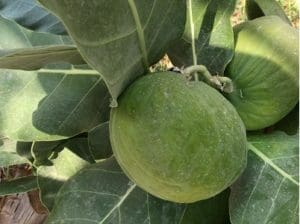
Arar bush and fruit in En Gedi in the Judean desert near the Dead Sea. Calotropis Procera was identified by Israeli botanist Nogah HaReuveni as the heath of Jeremiah 17. The plant is also called Apple of Sodom.
Photo by John Buckner. November 2020.
Discover more from Enjoying the Journey
Subscribe to get the latest posts sent to your email.