Bethel
“And God said unto Jacob, Arise, go up to Bethel, and dwell there: and make there an altar unto God, that appeared unto thee when thou fleddest from the face of Esau thy brother” (Genesis 35:1).
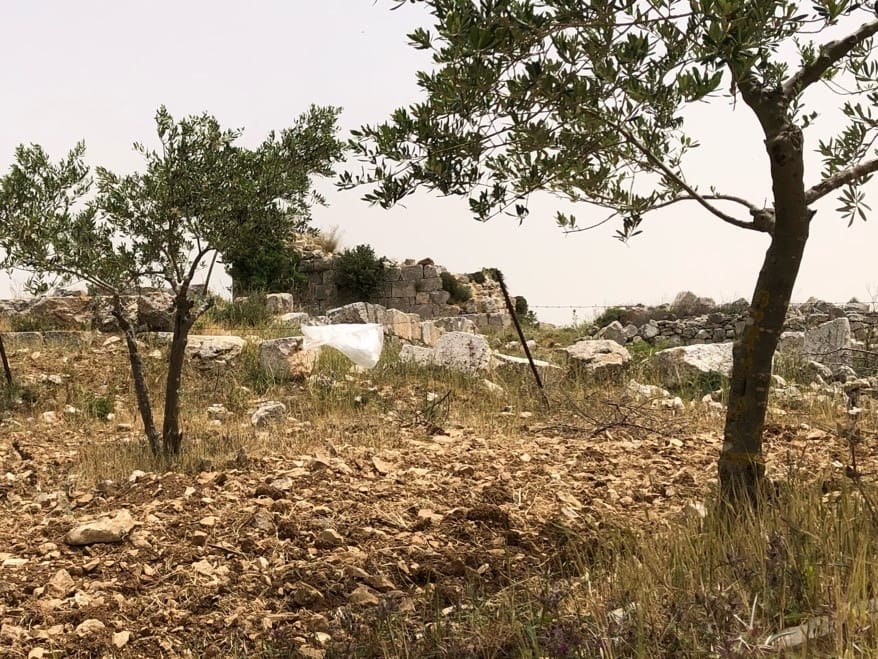
“Don’t go to Bethel!” That was the advice that I received when I brought up the subject. Most modern travelers go to the Israeli settlement named Bethel, which is located near the biblical site. From the observation tower, you can see biblical Bethel on the horizon. When I was on the observation tower, the guide stated that nobody went to the actual site of Bethel since it was too dangerous.
However, despite the warnings, I decided to go due to the significance of Bethel in the Bible. I caught the bus from east Jerusalem at the station by the Garden Tomb, to Ramallah in the West Bank. From Ramallah, I took a taxi out to Beitin, the Arab village identified as biblical Bethel. Once I was in the village, I asked at a grocery store where the site was located. Surprisingly, the clerk was a jovial Muslim man who used to live in Missouri, and was happy to direct me to the place, even though he was puzzled as to why anyone would be interested in it.
Bethel in Scripture
In the Bible, Bethel changes meaning from a holy place, to being unholy and polluted by idolatry. It was the place where Abraham pitched his tent, and where Jacob saw the ladder full of angels. God spoke to Jacob in Bethel and changed his name to Israel. Later, the prophet Samuel judged Israel in Bethel as part of his circuit through the land. Sadly, upon the division of the land into two kingdoms, the rebellious king Jeroboam placed one of his two golden calves here. Bethel quickly changed from being a holy place, and instead became associated with sin and idolatry in the kingdom of Israel.
The prophet Jeremiah wrote that Israel was ashamed of their misplaced confidence in Bethel (Jeremiah 48:13). The minor prophets, Amos in particular, preached against Bethel and the idols of the king of Israel. “But seek not Bethel, nor enter into Gilgal, and pass not unto Beersheba: for Gilgal shall surely go into captivity, and Bethel shall come to nought” (Amos 5:5). Amos was even personally threatened by Amaziah, the idolatrous priest of Bethel, who wrote to king Jeroboam disparaging the prophet.
An unnamed prophet, sometimes believed to be Iddo, foresaw that God would raise up a king named Josiah who would destroy the temple at Bethel, and burn the bones of the priests. He prophesied this to King Jeroboam some three hundred years before the events of Josiah of Judah’s reign. The righteous king of Judah, upon hearing the words of the Book of the Law, led his kingdom in national repentance. Then he destroyed all traces of idolatry from his land, and from cities such as Bethel that were outside of his jurisdiction. In his zeal to overthrow pagan worship, he crossed the border into the northern kingdom of Israel and tore down the temple and altar at Bethel.
Bethel and the Believer
Do you have a Bethel in your life? Do you have a place that used to be holy and a testimony to the power of God that you have let the enemy corrupt? Do you have an aspect of your life that once spoke of the majesty of God but you have let the enemy pollute it? When Satan is looking to erect his idols in your life, he prefers to invade holy ground. If you have allowed him to take over the places that once belonged to God, the story of Josiah gives hope. Be like the righteous young king of Judah, listen to the Word of God, and tear down your idols. Burn them, stamp them to powder, and in repentance turn back to God.
“And all the houses also of the high places that were in the cities of Samaria, which the kings of Israel had made to provoke the Lord to anger, Josiah took away, and did to them according to all the acts that he had done in Bethel” (2 Kings 23:19).
Related Resource:
Discover more from Enjoying the Journey
Subscribe to get the latest posts sent to your email.