Up and Down in the Sorek Valley
“And it came to pass afterward, that he loved a woman in the valley of Sorek, whose name was Delilah.” Judges 16:4
The two most well-known inhabitants of the Sorek Valley in the Bible were Samson and Delilah. Before he was born, an angel told Samson’s parents that he would deliver Israel from the hand of the Philistines. He was chosen by God to dwell in the hilly border area of the Sorek and to be a shield against the Philistines. Instead, Samson spent time with his enemy and eventually decided to marry someone he met when he “went down” (Judges 14:1) to the Philistine plain.
Samson and Delilah
The Bible tells us that his parents pleaded with him to find a woman from among his own people, the people of Israel. Despite this, Samson insisted on marrying his unnamed Philistine wife down in Timnath. After this marriage ended disastrously, it appears that Samson listened to his parents’ pleas and found an Israelite woman from his home area in the Sorek Valley. However, she was worse than anything that his parents could have imagined: Delilah.
Despite common belief, and in contrast with Samson’s other love interests, she is never identified in the Bible as a Philistine. Instead, she is a resident of the territory of the tribe of Dan in the Sorek borderlands, just as Samson was. This, combined with her Hebrew name, shows us that Samson finally found and loved a local woman. The problem is, we never read that she loved him. Samson no doubt thought he was doing the right thing when he stopped his dalliances with the Philistines and pursued her. However, his ultimate betrayal did not come from one of his Philistine lovers, but from Delilah.
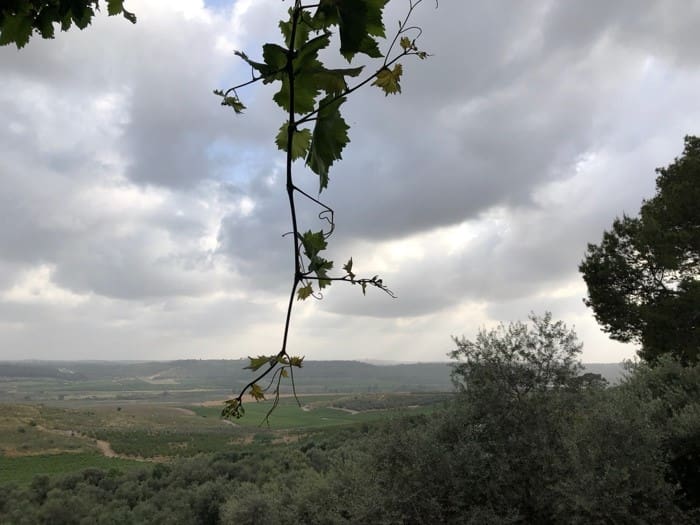
The Sorek Valley is the name given to a series of interconnected valleys and ridges west of Jerusalem in the tribal allotments of both Judah and Dan. The Sorek has always served as a natural defense for the central highlands of Israel, making invasion from the west impractical both in antiquity and modern times. Much of the narrative of the books of Judges, I and II Samuel, and I and II Kings concerns the Philistines trying to push up from the plains into the Israelite hill country, while the Israelites use the rugged geography to defend against these attacks.
Like Samson, Delilah was amenable to Philistine culture, perhaps from living in close proximity to the cities on the coast. The lords of the Philistines “came up” (16:5) from the plain to see her, and she accepted a massive bribe to reveal to them the secrets of Samson’s God-given strength. Instead of recognizing that the Philistines were her people’s enemies and that Samson was sent by God, or perhaps in spite of that, she cut a deal to betray him.
A Warning for Believers
Delilah teaches us to beware of appearances. Samson defeated the Philistines in hand-to-hand combat on many occasions. Even his name exudes power; it means “man of the sun.” Delilah’s name means either “delicate” or “feeble.” In the end, Samson trusted in his own power and allowed a seemingly weak enemy to conquer him.
Christian, what is the beautiful, delicate enemy you are foolishly allowing to lurk in your life? That sin that you love, but that despises you and is working to destroy you? It may appear to be familiar, even harmless, but it is conspiring to hand you over to your enemy. Repent now, before it brings you down.
We learn that Samson was captured and “brought down” (16:21) to Gaza, one of the cities on the plain. He only returned to the Sorek Valley when his father and brothers retrieved his corpse and “brought him up” (16:31) to his hometown for burial.
“Thus saith the Lord God; Because the Philistines have dealt by revenge, and have taken vengeance with a despiteful heart, to destroy it for the old hatred;” Ezekiel 25:15
The name Sorek is believed to come from the name of a grape variety, the noble vine.
Photo by John Buckner
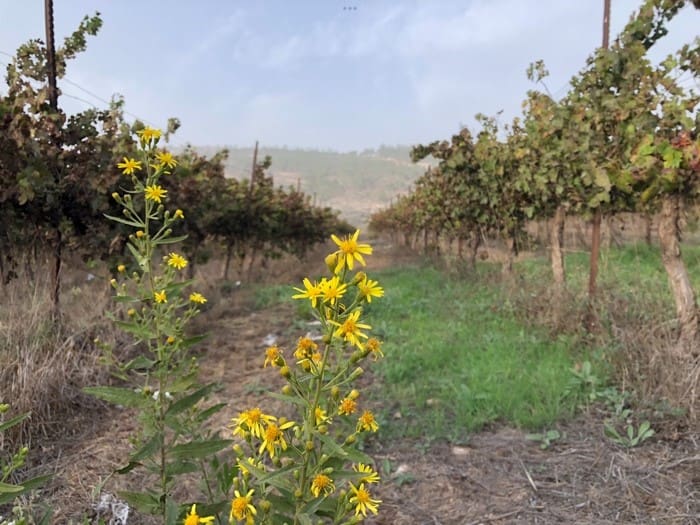
Grapevines in the Sorek Valley, near biblical Emmaus.
CLICK HERE For More On the Life of Samson
Click HERE to study the life of Samson with Scott’s Enjoying the Journey broadcast series
Discover more from Enjoying the Journey
Subscribe to get the latest posts sent to your email.