Discouragement is rampant these days. Spiritual warfare has intensified, and the battle for truth, righteousness, and souls has never been fiercer. It should be a reminder to us that victory is soon! The battle is always hottest just before it is won. And until the fight is finished, we must seek to encourage ourselves and one another. “Endure hardness, as a good soldier of Jesus Christ” (2 Timothy 2:3).
The Destructive Nature of Discouragement
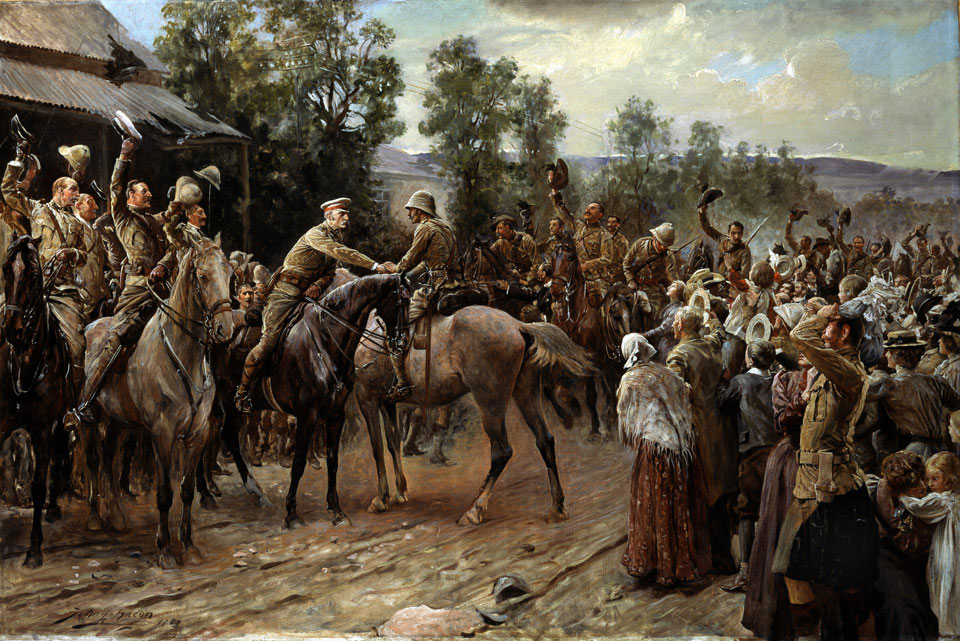
In the Second Boer War in South Africa, 13,000 British troops were trapped for 118 days in what is now known as the Siege of Ladysmith. Food diminished, and disease grew. Worst of all, discouragement set in. A civilian was arrested, tried, and sentenced to a year in jail for being a discourager! This man was not a traitor, but he walked around town and spoke discouraging things to men who were on guard against the enemy. The deepest wound you can inflict is to wound a person’s spirit (Proverbs 18:14).
The court-martial deemed that it was a crime to speak discouraging words at such a critical time. Our jails would be overflowing if we incarcerated everyone who spoke discouraging words today! Sadly, discouragers and those they influence are locked in a prison of their own making, bound by a high view of trouble and a low view of God. Discouragement brings defeat.
Adrian Rogers, in his sermon on Barnabas, “The Church Member of My Dreams,” said, “Discouragement is the darkroom where the negatives of failure are developed.” Sadly, discouragement does not affect only the discouraged soul. Like a contagious disease, it spreads quickly.
What do you know about Shammua, Shaphat, Igal, Palti, Gaddiel, Gaddi, Ammiel, Sethur, Nahbi, and Geuel? Probably nothing. They are real men in Scripture. They were the ten spies who spoke in unbelief to Israel about possessing the Promised Land. Their “evil report” brought discouragement and death to an entire generation (Numbers 13:31-33).
The Power of Encouragement
Joshua and Caleb were the only spies who spoke with the courage that grows out of faith – and they are the only two spies whose names are remembered today. It is often true that the majority of people are not encouraging, but God works through the righteous remnant who will live and speak in faith.
Be the two and not the ten.
Warriors must be encouragers. They fight the enemy, but they also strengthen one another. Jonathan went to David when he was running for his life and “strengthened his hand in God” (1 Samuel 23:16). Mordecai encouraged Esther to stand strong and speak up (Esther 4:13-14). Titus encouraged Paul by coming to him and sharing a good word from the church (2 Corinthians 7:5-7). Just your presence may at times be the very encouragement that is needed! The strongest believers in Scripture needed fresh courage themselves, and the most spiritual ones teach us how to encourage others.
“Encourage him” (Deuteronomy 1:38). Those were the words of God to Moses regarding Joshua. Encourage him! The battle will be strong. The enemy will be mean. The flesh will be weak. Encourage him!
Encourage Others
Charles Spurgeon said of this text:
“God employs his people to encourage one another. He did not say to an angel, ‘Gabriel, my servant Joshua is about to lead my people into Canaan–go, encourage him.’ God never works needless miracles; if His purposes can be accomplished by ordinary means, He will not use miraculous agency. Gabriel would not have been half so well fitted for the work as Moses. A brother’s sympathy is more precious than an angel’s embassy.”
The Lord wants to use you to encourage someone. Who has God placed in your path? Is someone coming along behind you? Who is struggling to go on? Encourage him!
- It is from David we learn that we must not wait on others; we must learn to encourage ourselves in the Lord (1 Samuel 30:6).
- From Moses we learn the necessity of encouraging others who are called to lead, especially as they begin some new work for God (Deuteronomy 3:28).
- From soldiers and priests, we learn the power of encouragement for those in battle or carrying burdens (2 Samuel 11:25; 2 Chronicles 35:2).
But it is from Barnabas that we best learn how to give encouragement to one another in a local church…
*This material was adapted from Scott Pauley’s book, The Ministry of Encouragement: Becoming a Barnabas in a Broken World.
RESOURCE: Barnabas: The Ministry of Encouragement
Discover more from Enjoying the Journey
Subscribe to get the latest posts sent to your email.
Post Author
More from similar topics
Barnabas | Caleb | David | Encouragement | Joshua | Ministry | Mordecai | Moses | church members | discouragement | local church