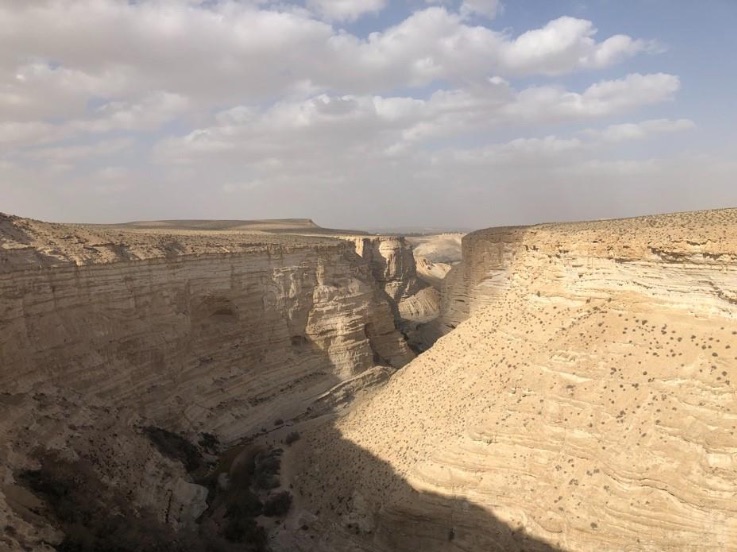
“Speak ye comfortably to Jerusalem, and cry unto her, that her warfare is accomplished, that her iniquity is pardoned: for she hath received of the Lord’s hand double for all her sins.The voice of him that crieth in the wilderness, Prepare ye the way of the Lord, make straight in the desert a highway for our God. Every valley shall be exalted, and every mountain and hill shall be made low: and the crooked shall be made straight, and the rough places plain:” Isaiah 40:2-4
LISTEN ON TRAVELER’S TALES
In the world of the ancient Hebrews, the wilderness held a special meaning. Their national story was of God bringing them out of Egypt and then guiding them in the desert for 40 years. The land that they were promised was full of fertile fields and vineyards, but it also had many desolate places, many wildernesses. These wild areas encompass some land that is still uninhabited today.
The Wilderness Is Where God Spoke
Isaiah 40 contains many well-known verses, not least of which is the one that John the Baptist quoted when the delegation from Jerusalem asked him who he was. However, within the Hebrew text is a bit of wordplay that illuminates a lot of ancient Jewish understanding of God and His workings. The word for wilderness is “meedbar,” (מדבר). This word is spelled exactly the same in the Hebrew text as “he speaks, or I speak.” He speaks/I speak is written the same (מדבר) but pronounced differently “meh-dah-ber.” Ancient readers of the Hebrew Bible saw these words and linked them in their minds. Therefore, the wilderness must be the place where He speaks to you.
In fact, God often chose the dry, wasted lands of the wilderness to speak to His people. We see the prophet Hosea playing with these two words when he prophesied, “Therefore, behold, I will allure her, and bring her into the wilderness, and speak comfortably unto her” (2:14). Throughout the Scriptures, God took His people, or His prophets, into the wilderness, into the desert, to speak to them.
The Biblical Significance of the Wilderness
I urge you to pay attention to this detail when you are reading the Scriptures in English. You will see that much of the time, when a wilderness is mentioned, it is directly connected to God speaking. It may be negative, such as when the Ezekiel reprimanded the people for disobeying God in the wilderness (20:13). It may be glorious, such as when God as the bridegroom exults over His bride, “Who is this that cometh out of the wilderness like pillars of smoke, perfumed with myrrh and frankincense, with all the powders of the merchant?” (Song of Solomon 3:6) It can be prophetic and messianic, such as when Isaiah tells the reader to seek out the book of the LORD and read, (34:16). In that future time the wilderness will blossom as the rose (35:1) God speaks to His children in the wilderness.
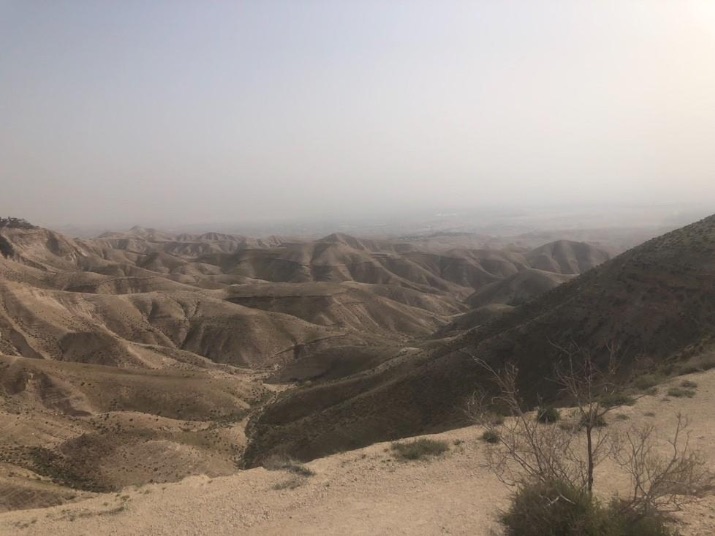
The hills of the Judean Wilderness. This rough land is not far from the fertile lands of the central highlands of Israel. It contains many important landmarks such as Jericho, En Gedi, and Masada. It is believed to be where Jesus fasted and was tempted by Satan. Photo by John Buckner
In fact, the Hebrew name for the book of Numbers is literally “In the wilderness.” That book begins with the words, “And the LORD spake unto Moses in the wilderness of Sinai, in the tabernacle of the congregation.” Over and over again, God spoke in Numbers. When you go into a wilderness, into a “meedbar,” (מדבר), you should never forget that God wants to speak, to “meh-dah-ber” (מדבר) with you. If you look around and all you see is dry wasteland, sit still and listen for the voice of God. It may be that He has brought you into the wilderness for this reason. It is not to punish you, but to speak to you.
“And he said unto them, Come ye yourselves apart into a desert place, and rest a while:” – Mark 6:32
RELATED STUDY: Journeying with John the Baptist
Click HERE to study the life of John the Baptist with Scott Pauley
Discover more from Enjoying the Journey
Subscribe to get the latest posts sent to your email.