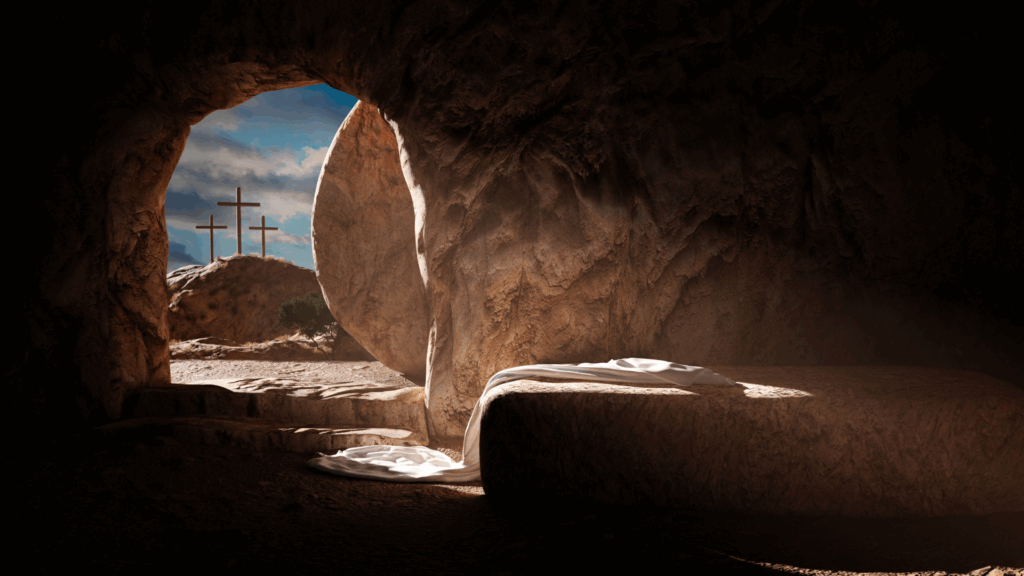
The reality of the resurrection of Jesus Christ is one of the foundational tenets of the Christian faith. Paul lays it out clearly in 1 Corinthians 15. It is as if he is setting a challenge to those who doubt the reality of Christ’s resurrection.
“Now if Christ be preached that he rose from the dead, how say some among you that there is no resurrection of the dead? But if there be no resurrection of the dead, then is Christ not risen: And if Christ be not risen, then is our preaching vain, and your faith is also vain. Yea, and we are found false witnesses of God; because we have testified of God that he raised up Christ: whom he raised not up, if so be that the dead rise not” (1 Corinthians 15:12-15).
Paul was so confident in the resurrection of Christ, he knew that any argument against this truth would fail. And he had ample reason to be confident! He had encountered the risen Christ on the road to Damascus, an event that left Paul blinded until God sent Ananias to heal him.
Proofs for the Resurrection
There is overwhelming evidence for the resurrection in God’s Word. Luke writes in Acts 1:3 regarding Christ’s resurrection: “To whom also he shewed himself alive after his passion by many infallible proofs, being seen of them forty days, and speaking of the things pertaining to the kingdom of God:” Picture a courtroom where a lawyer is presenting his evidence to the judge. A skilled lawyer is not going to choose questionable or circumstantial evidence. No, that lawyer will choose indisputable evidence. And that is the kind of specific evidence that Luke (a doctor) is writing about in Acts. And notice that it is not just one piece of evidence, but many infallible proofs. These proofs remove any doubt of the resurrection. Furthermore, the original audience of this letter could have verified the proofs.
The Evidence of Eyewitnesses
Imagine that a lawyer summons you to testify in a court of law. The judge will only allow you to give testimony if you are an eyewitness to the event. Secondhand testimony, or hearsay, is not admissible.
The women who followed Jesus and who went to His tomb to anoint His body discovered that it was empty. At the time this was written, women were not allowed to testify in court, and their message was not believed at first, even by the disciples. However, this actually points to the veracity of their testimony. The writers of Scripture referenced the eyewitness testimony of women; if the event were not true, it would be a strange choice because their credibility would immediately be called into question. Yet, the record stands.
Peter and John had seen the resurrected Lord, and they told others about it. During a sermon given in Acts 4, Peter said, “Be it known unto you all, and to all the people of Israel, that by the name of Jesus Christ of Nazareth, whom ye crucified, whom God raised from the dead, even by him doth this man stand here before you whole” (Acts 4:10). After being confronted by the high priests and Jewish leaders, Peter and John responded in Acts 4:20: “For we cannot but speak the things which we have seen and heard.”
The Evidence of Changed Lives
The resurrection of Christ had a tremendous impact on many lives. Consider two examples — Peter and Paul.
Peter
Jesus told His disciples that they would be scattered after His arrest. Peter was quick to speak up for himself. “Peter answered and said unto him, Though all men shall be offended because of thee, yet will I never be offended” (Matthew 26:33). Only 37 verses later, Peter denied Him multiple times.
Yet, after Christ’s resurrection, Peter preached boldly, taking no thought for his own personal safety. The authorities beat him and threw him into prison, but he persisted in spreading the gospel. What changed? He encountered the risen Lord Jesus Christ.
Paul
The first time we see Saul in the Scriptures, he is holding the coats of those who are stoning Stephen (Acts 8:1). We next see him in Acts 8:4 described in these not-so-glowing terms: “As for Saul, he made havock of the church, entering into every house, and haling men and women committed them to prison.” Acts 9:1-2 cements his reputation as antagonistic to Christianity: “And Saul, yet breathing out threatenings and slaughter against the disciples of the Lord, went unto the high priest, And desired of him letters to Damascus to the synagogues, that if he found any of this way, whether they were men or women, he might bring them bound unto Jerusalem.” To say the least, he was not a follower of Jesus Christ!
But on the road to Damascus, Saul encountered the Lord Jesus Christ. He became a powerful witness for the Lord, and God used him greatly to spread the message of the Gospel to the Gentiles. What changed? He encountered the risen Lord Jesus Christ.
We look forward to the day when we will meet the risen Lord Jesus in the flesh. The saving power of the risen Savior changes us when we call out to Him to save us and enter into a relationship with Him. He is still transforming hearts every single day. The work of Jesus Christ has changed our lives and our eternal destination forever.
The Evidence of Extra-Biblical Authors
Not only do we read of the resurrection of Jesus in the Bible, but others who were contemporaneous to the events also wrote of Christ’s resurrection.
- Flavius Josephus, who lived from 37-100 A.D., wrote about Christ and the reports of His resurrection by His followers. Although not a believer, Josephus was clearly aware of reports of the resurrection of Christ. He even connected them to the prophecies about Him.
- Lucian of Samosata was a satirist who wrote mockingly of the belief of Christ’s followers that He rose from the dead. Though Lucian was not a believer, just like Josephus, he was aware of the widespread belief in Christ’s resurrection.
- Clement of Rome and Ignatius of Antioch were early Christians who often wrote on the reality of Christ’s resurrection.
Conclusion
The evidence is clear: we can have faith in the reality of the resurrection of Jesus Christ due to the eyewitness accounts, changed lives of those who encountered Him, and even the writings of extra-Biblical authors. So, what will you do with this information? What is your response to the reality of the resurrection? If you are not a believer, turn to Christ today. He rose from the dead to grant eternal life to those who believe on Him. Put your faith in Him.
If you are a believer, I encourage you to keep this evidence in mind. Study these passages. Be ready to give an answer when you are sharing your faith with someone who exhibits skepticism about the risen Christ. We know that Christ rose from the dead, and He can save souls and transform lives. We must share the wonderful messages of salvation with a lost and dying world.
Related Video Series: How to Tell Others About Jesus:
Discover more from Enjoying the Journey
Subscribe to get the latest posts sent to your email.